

The Other Recovery: When You Love Someone Who Uses Substances
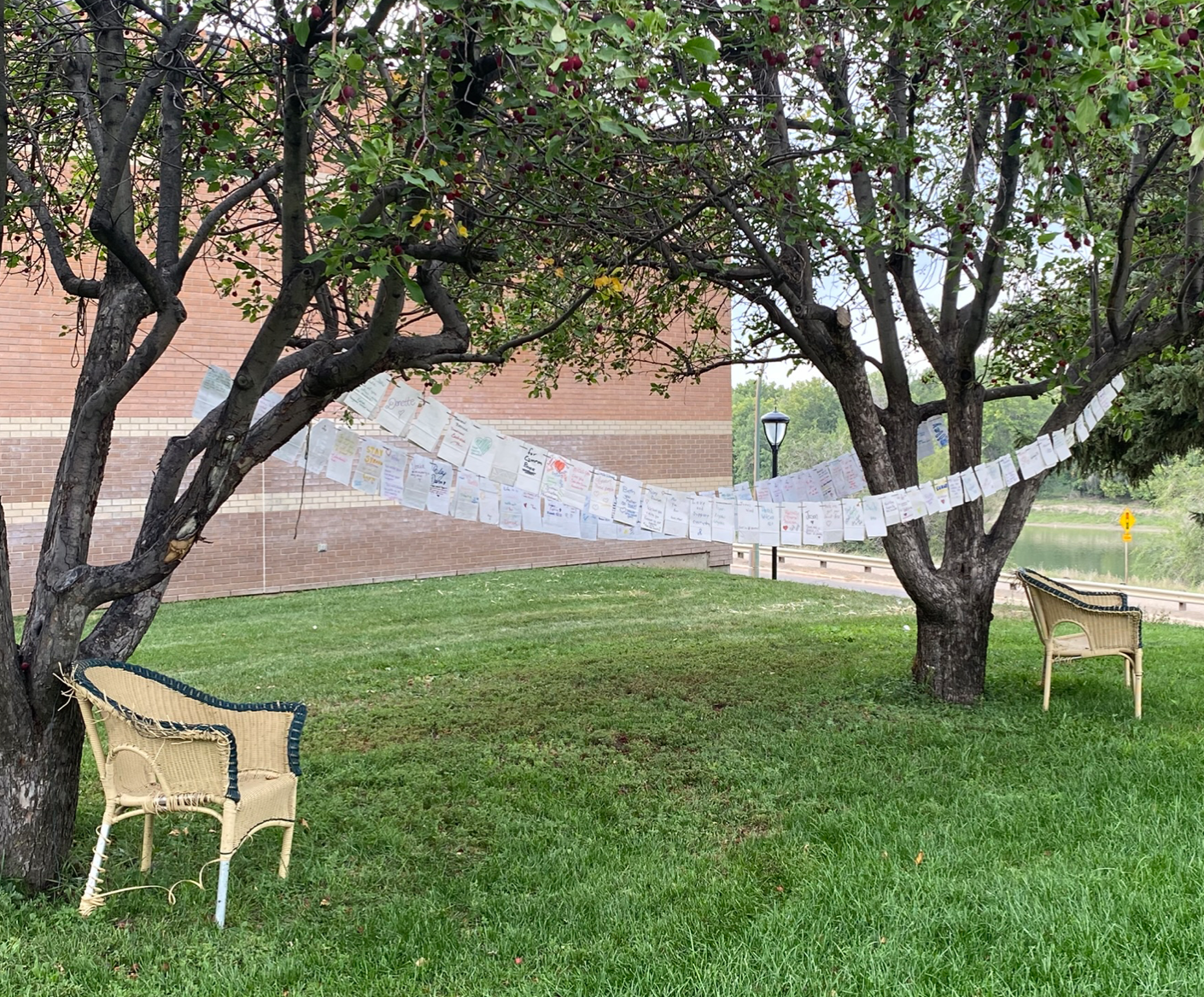
From International Overdose Awareness Day, Medicine Hat August 2025
This Mental Health Week, I am not writing to the politicians or the pundits. I am writing to the person who watered down a drink, who lied to the boss again, who matched the wine to the tablecloth so it wouldn't get ruined.
Trigger warning: This column discusses substance use, alcoholism, domestic instability, child neglect, impaired driving, drug poisoning (overdose). You will find resources at the bottom of the page.
I come from a long line of substance users on both sides of my family. I know the wreckage, and I know the love that tries to hold it together.
The unsung heroes
Society praises the person who is in recovery, and rightly so because recovery is hard. But who held the family together while that person was in freefall? Who lied to the boss, soothed the kids, paid the bills, and showed up to Christmas dinner pretending everything was fine?
Those people never get a standing ovation.
Addiction is a family disease. The family members, especially the ones trying to hold everything together, end up in crisis themselves. Anxiety disorders, lost sleep, and the endless math of how do I keep this person alive without destroying everyone else becomes their daily bread.
They are the unsung heroes.
This Mental Health Week, we need to say that out loud.
The second wound
There's a stigma that comes with loving someone who uses substances. People ask: Why didn't you stop them? Why did you let this happen? Why didn't you do more?
As if you had a magic wand. As if addiction listens to reason. As if you weren't already asking yourself those questions every single night.
But the worst question isn't asked by others. It's the one you ask yourself when you're young, before you have words for any of this.
You grow up thinking your family is normal. The spills, the lies, the empty bank account, the parent who drinks fortified wine from a coffee cup at 7am - that's just... Tuesday.
Until you see another family.
One where nobody is walking on eggshells. Where holidays don't come with a backup plan.
And you realize: oh. This isn't what everyone lives with.
And then you start to ask questions: What am I doing wrong? What are they doing that I'm not? How can I fix this?
Nothing. You were doing nothing wrong. You were a child. And children aren't supposed to fix adults.
If you've carried that question into your own adult life - into your own relationships, your own parenting, your own sleepless nights - I want you to hear this: it was never yours to answer.
This is NOT your fault.
Compassionate non-enabling
Not enabling someone you love is brutal because it goes against every instinct. However, it is not the same as letting them starve or freeze. I have seen people on social media demand that everyone be abstinent before being given shelter or housing or even food.
That is not tough love; that is cruelty dressed up with a moral license.
Compassionate non-enabling means letting them suffer the consequences of their choices without creating new suffering for them. Do not lie to their boss, and do not pretend the bottle in the garage does not exist.
At the same time, ensuring someone has food and shelter does not mean they have to be in your home. There is a real difference between offering support and setting yourself on fire to keep someone else warm.
Families walk this razor thin line every day with no training, little support, and no applause.
How I Learned I Couldn't Fix Him
My dad was in a bad spot when I was a teen. I thought that I could save him. I told him that I would move in with him but he had to promise to quite drinking and he did - for a short time.
Then he said he would not drink before 5 p.m.
Then he said he would not drink before noon.
When I found him pouring fortified wine into his coffee cup first thing in the morning, I left.
I learned that no matter how much I loved him, I could not fix him.
He Never Missed a Day of Work - Because He Went in Drunk
My ex husband always said he could not possibly be an alcoholic because he never missed a day of work. Never mind that he was often still drunk when he went drove to work and then he drove the company vehicle.
My ex also volunteered as a minor hockey coach, all of the team coach meetings were in the bar (but he wasn’t an alcoholic). He got an impaired driving charge while driving the bus for the minor hockey team. (Luckily, there were no kids on board or he would have been hung and quartered by the parents.) When he lost his license, he hid that knowledge from his employer. He nearly lost his job; they had to reassign him to tasks where he did not need a vehicle.
One time I did not want him driving drunk, so I tried to block the front door. He jumped off the balcony instead and drove away.
Seeking Help Helped Me
After the balcony incident, I went to an Al-Anon meeting. I was exhausted and at my wit's end. They taught me something invaluable: detach yourself from the addiction, not the addict. If he got an impaired charge, so be it. If he jumps off a balcony and breaks something, so be it. It was not my problem.
That sounds simple, but it is not.
Letting them face consequences often means the family suffers anyway, especially when the breadwinner loses their license and their job. The fines, the burden of being the only legal driver in the household, the panic when they drive illegally (and we all know it happens). There is also the increased insurance premiums when they do get their license back.
Recovery is not Just for Those Who Use Substances
There is help out there. Al Anon was not the right fit for me but it might work for others. Some actively using loved ones resent family members who attend meetings like this, which creates another barrier to getting help.
The person in treatment gets to focus on their recovery fully and completely, as they should.
Meanwhile, the family still has to get up, make breakfast, go to work, and pay the mortgage and hold everything together. When the person is in recovery, they are lauded by all but the families often get little praise.
This does not mean the person using substances has it easy, because they do not. However, recovery looks different for everyone involved, and grace needs to go both ways. The family has no reason to trust because they have been burned too many times.
The person coming out of active substance use often does not know the full extent of the damage they caused. Yes, they were sick. That sickness is real, but so is the wreckage it leaves behind.
So I want you to know: you are allowed to recover too. Your recovery will not look like theirs.
The Stigma That Doesn't Belong to Us
My late husband had an artificial leg and a wrecked ankle. At one point he was prescribed a fentanyl patch for his chronic pain. He used it properly and it nearly killed him when through no fault of his own, his kidneys shut down and the fentanyl built up in his system to a lethal dose. If I had not been there to pound on his chest and do CPR until the paramedics came he would have died. We took off the patch and did not replace it; nine hours later, he was unresponsive again.
It was the same poisoning.
A few days later he went for a follow-up with the locum doctor covering the absence of our family doctor. My husband mentioned - half jokingly, because that's how he coped - that he'd overdosed twice and almost died.
The locum looked at him with visible disdain and asked:
"Were you trying to get it right?"
We were stunned. We couldn't believe a medical professional would say something so cruel.
That's the stigma. That's what families face when they're already drowning. Not just from neighbours or strangers - from the people who are supposed to help.
If that can happen to him, with a house, a wife, a job, and a family doctor who believed him, what happens to people with none of those things?
The World Does Not Owe Me Safety From My Past
My mother is a retired registered nurse, and she saw the worst of the worst over her career. When a friend bought me a Jolly Jumper for my son, she was very upset because she had seen babies with injuries from this product. She was adamant that I should throw it way and never use it. I told her that I only used it for ten minutes at a time and always under supervision. I pointed out that she had seen only the worst cases, and she agreed with me. (My son was fine as were my other children.)
Those of us who have seen the worst do not believe that anything less can exist. We become hyper vigilant as a result. We try to control everything, we demand abstinence, and we pour booze down the drain. However, most babies are completely fine in Jolly Jumpers when they are used as directed, most people can have a drink and then stop.
Here's what I had to learn: just because I am triggered does not mean the world is wrong. My trauma is real - but it is not everyone else's problem to manage. I cannot demand that others walk on eggshells because of what happened to me.
The peacemaker's curse
Here is something nobody tells you about growing up around substance use: you learn to become a peacemaker. You do not want anyone to be upset, and you will set aside your own needs, your own safety, and your own sanity just to keep things from exploding.
You learn to read a room before you learn to read. You learn to soothe before you learn to ask for what you need. You learn that your own feelings are a luxury you cannot afford. Then you grow up, and you keep doing the same things at work, in your relationships, and in your own family.
If that sounds like you, you are not broken. You were trained that way, and you can unlearn it. But first you have to see it.
Nothing you do can make a person start using substances. Nothing you do can make them stop.
It is NOT your fault.
The Code Orange truth
I will never love alcohol. I have seen what it did to my family. However, I do not expect the rest of the world accommodate my history. Hyper vigilance is a symptom of trauma. Many of us do not even know that other people get to live differently, that they do not have to live in fear of the other shoe dropping. They do not have to worry about someone getting drunk and out of control because it doesn’t happen.
To the families still in the trenches, I see you.
You are not weak for staying, you are not wrong for leaving, and you are not the problem.
To the policymakers, stop using our trauma as bad policy cover.
Fund pain clinics, fund mental health, and fund supervised sites. Stop lying about them as well, nobody has ever died at a supervised consumption sites.
I saw a post online that said loving an addict means watching a tragedy unfold like a movie and feeling completely helpless to stop it. I have felt that feeling on many nights. The people who are holding their families together are running out of rope, and some of them will become the next mass casualty statistic. Not from drugs, but from the simple, bone deep exhaustion of loving someone who is drowning.
Here are some traumas from my past - I could go on and on and on…
Resources are below this list
Where to find help (for you, not just for them)
You don't have to do this alone.
Medicine Hat & area local resources
Community Addiction & Mental Health (Adult Services) – 1-888-594-0211 (intake)
Outpatient assessment, treatment, and follow-up. Requires valid Alberta Health Care Card. Located at the Medicine Hat Provincial Building (346 3 Street SE).
Cost: Free.
Community Addiction & Mental Health – Child, Youth, Family & Prevention Services – 403-529-3582 Counselling and support for children, youth, and families. Located at 346 3 Street SE.
Cost: Free.
Provincial Mobile Addiction Outreach (McMan Youth Family and Community Services) – 403-952-6228 or 403-527-1588
Mobile and outreach services for street-involved individuals and the underserved/homeless population. Located at 941 Railway Street SE.
Cost: Free.
SafeLink Alberta Drop-In Centre – 403-527-5882
Free harm reduction supplies, including naloxone kits, safer substance use supplies, peer support, food, hygiene supplies, and referrals for housing and treatment support. Located at 419 North Railway Street. Open Monday-Friday, 1:00 PM – 4:00 PM.
Cost: Free.
Al-Anon Family Group (Medicine Hat) – 403-527-8252 or 1-888-4-ALANON (425-2666)
Mutual support group for families of people with drinking concerns.
Cost: Free.
Narcotics Anonymous (Medicine Hat) – Check local meeting listings through "In The Rooms" search or local helpline.
Cost: Free.
Gamblers Anonymous – "Madhatters" Meeting – Mondays at 7:30 PM at Gas City Kiwanis Center (826 11 Street SE).
Cost: Free.
Alberta-wide resources
Alberta Addiction & Mental Health Helpline – 1-877-303-2642 (24/7)
Staffed by nurses, social workers, and psychologists. You can call for yourself - even if the person you're worried about isn't ready for help. Crisis support, information, and referrals.
Cost: Free.
211 Alberta – Call 2-1-1 or text INFO to 2-1-1
A searchable database of community resources. Can help you find counselling, support groups, and other services near you.
Cost: Free. Confidential. Available in over 170 languages over the phone.
Alberta Health Services - Adult Addiction Services – 1-888-594-0211
Individual or family counselling related to substance use concerns. You can access this as a family member, even if the person using substances isn't ready.
Cost: Free. All programs are voluntary, confidential, and free.
Family Violence Info Line – 310-1818 (24/7)
If substance use is creating an unsafe home environment - even without physical violence - this line is for families.
Cost: Free.
SMART Recovery Family & Friends
A secular, evidence-based support group specifically for family members. No higher power language. Practical tools for setting boundaries and managing stress. Online meetings available. Cost: Meetings are free. A voluntary donation (passing the hat) may be requested at in-person meetings - no obligation. The handbook costs money, but you don't need it to attend. Free worksheets are available on their website.
Al-Anon Family Groups
Mutual support groups for families of people with drinking concerns. Some meetings use spiritual language ("God as we understood Him"), which is a barrier for some. Others are more secular - you can call ahead and ask.
Cost: Free. Voluntary contributions are appreciated but not required.
Nar-Anon Family Groups
Similar to Al-Anon, but focused on drug use (not just alcohol). Also offers Narateen for teens affected by someone else's substance use.
Cost: Free.
Naloxone kits
Free at over 2,000 locations across Alberta, including many pharmacies and community health centres.
Cost: Free. No prescription needed.
You are not the problem. You are not weak for staying, and you are not wrong for leaving. You are someone who loved a person with a substance use disorder. That's a different kind of hard.
