

Medicine Hat’s silent outages: No live map, no priority list
The power went out at 12:50 am Monday, it was out for nearly 3-½ hours. Power outages that long are common in other areas but not Medicine Hat, the city has an enviable record of reliability.
2026 is an outlier year with multiple power outages - 9 between May 27 and July 30
The city’s explanation - Weather Related
This outage’s cause was weather-related. Wet snow created a conductive path on a contaminated pole insulator, triggering an electrical flash. The pole was damaged, but the support system held. The city says its protection devices worked as designed. The guy wires held; the conductors never hit the ground.
This is a documented phenomenon in semi-arid climates. Dust and debris accumulate on insulators over time. In a wetter climate, rain would likely wash that contamination away.
The city said crews responded immediately and power was restored to all customers by 4:15 a.m. The Owl was there and got the shot of the repairs in progress.
Nowhere to look
Medicine Hat is unusual among Alberta utilities.
ENMAX, EPCOR, Lethbridge, all operate real-time outage maps, some have a mobile app. Customers can view the cause, start time, estimated restoration time, and number of customers affected in their area. Some offer push notifications when crews are dispatched and when power is restored. Most offer a version of a Critical Power User registry for those using home medical equipment such as oxygen concentrators, CPAP machines, home dialysis, respirators, etc.
Medicine Hat does not.
Medicein Hat has a very high popualtion of seniors, soon seniors will make up 30% of the population of the city.
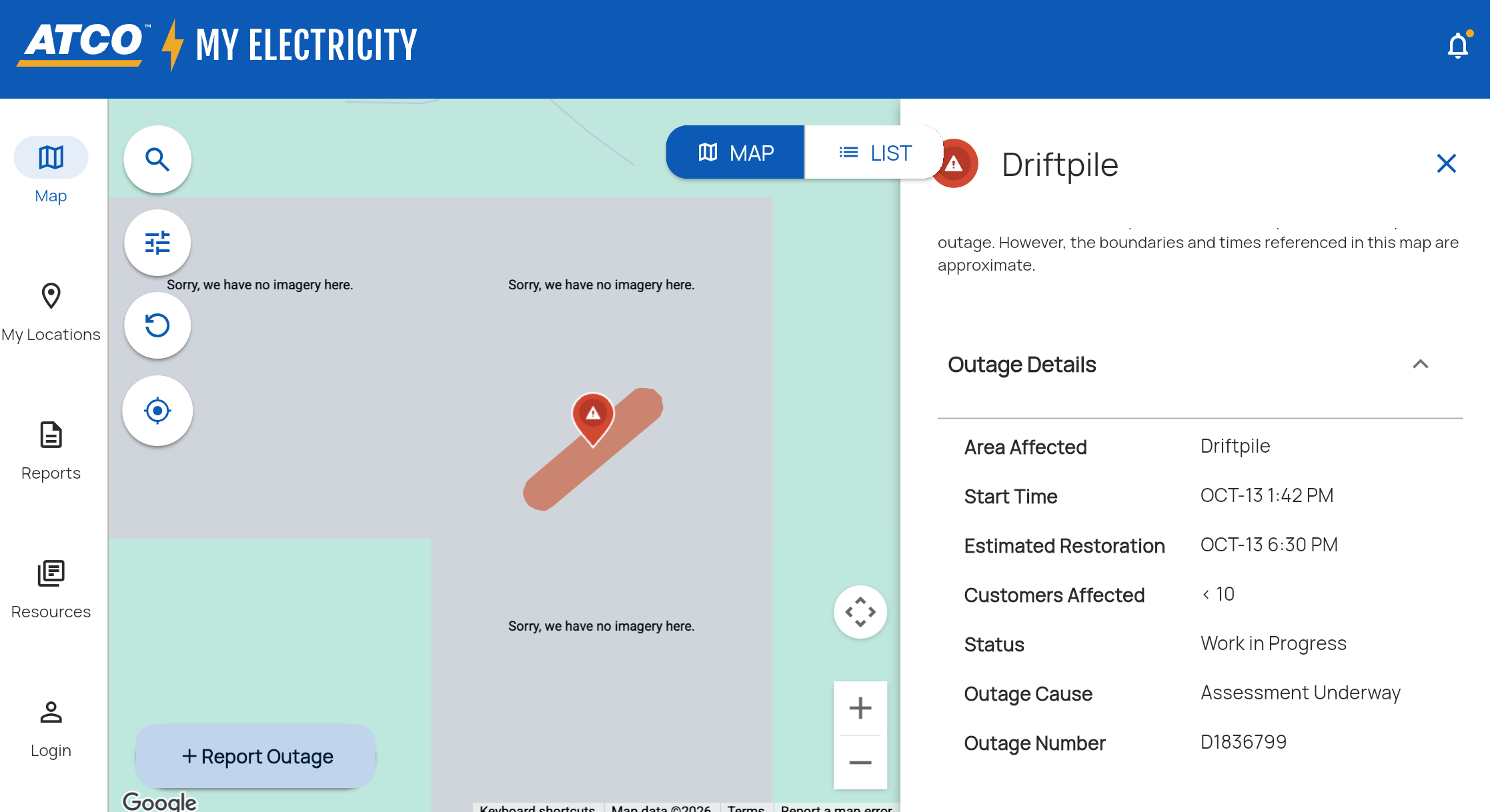
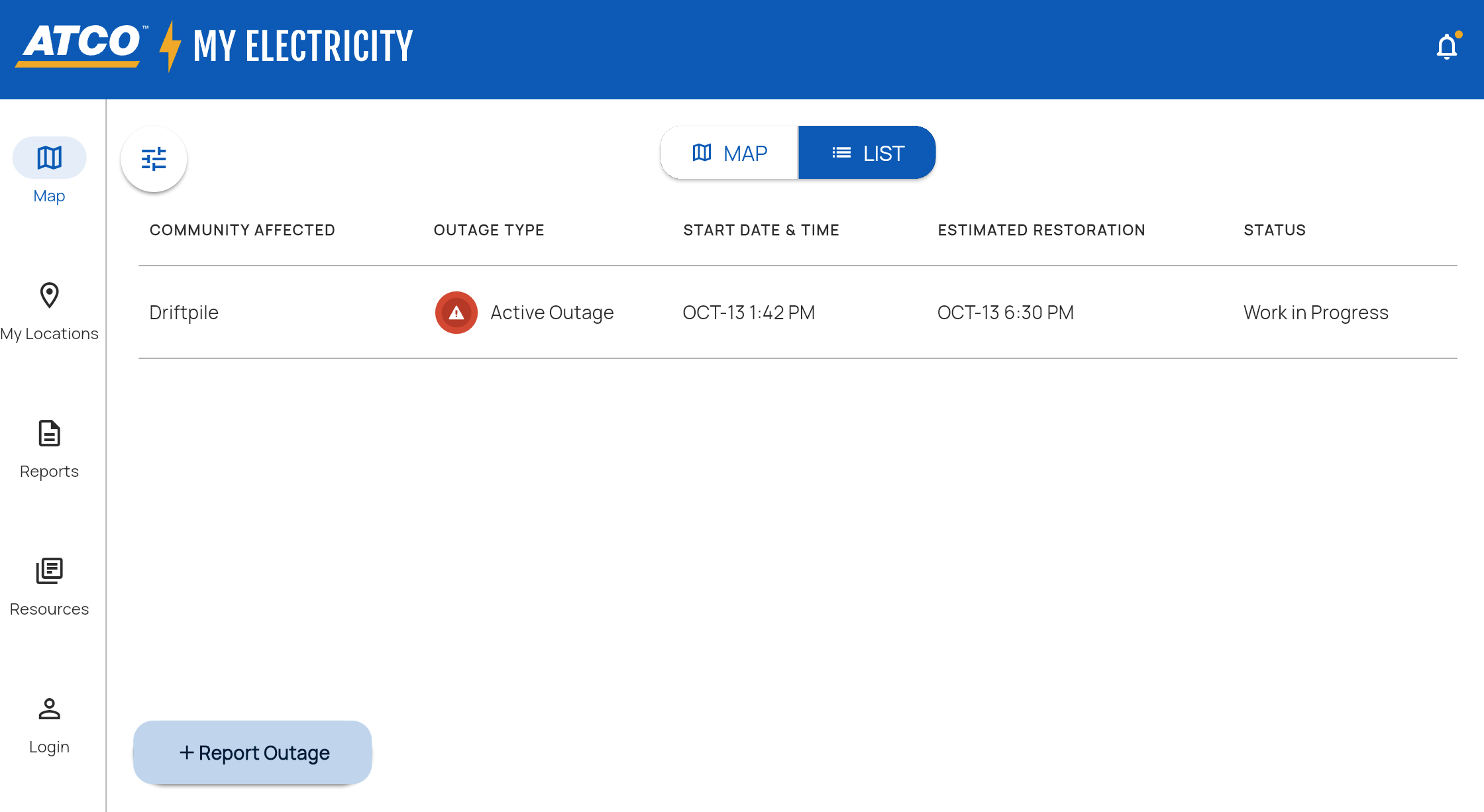
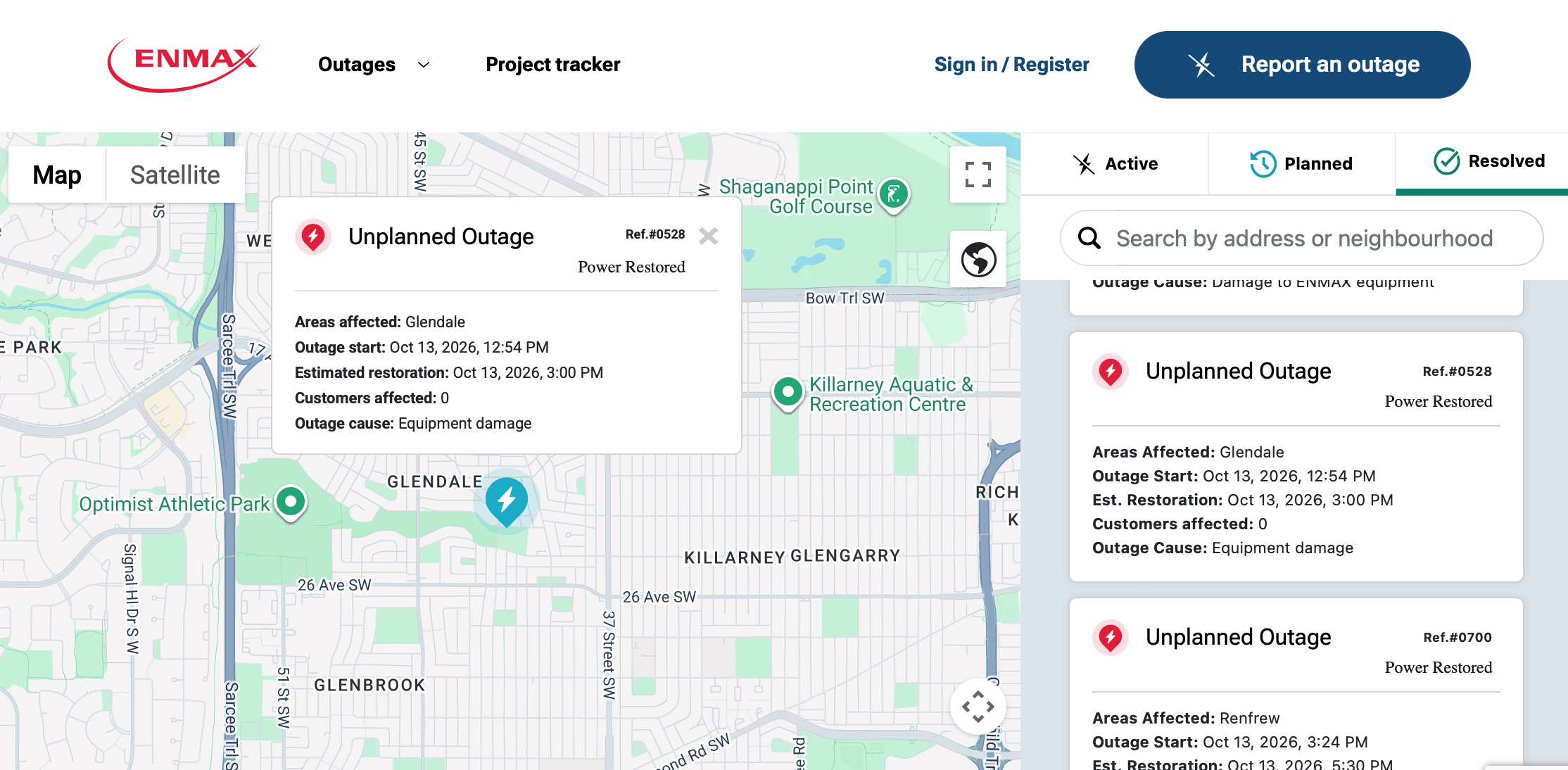
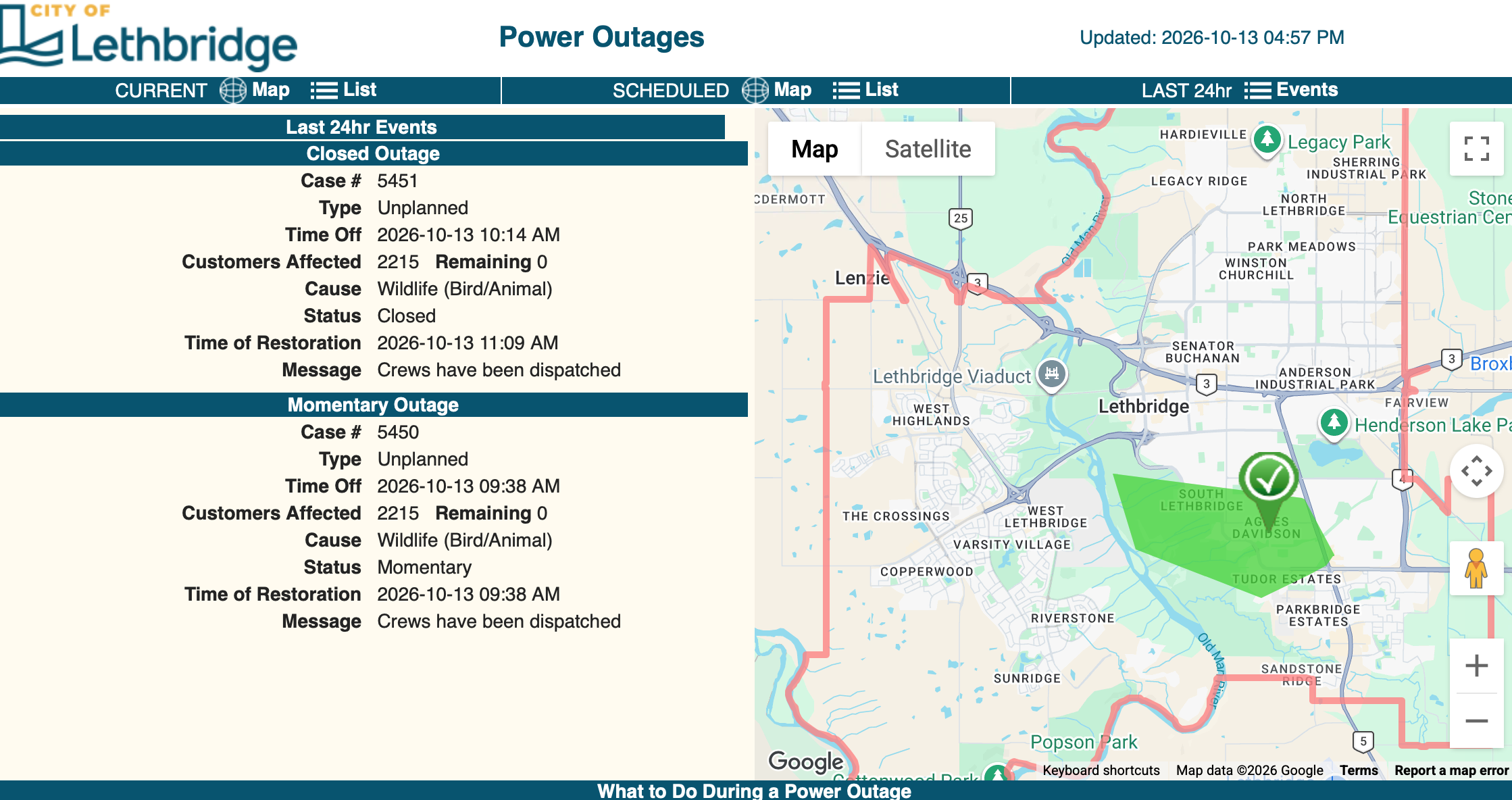
Of course the customer must be prepared for power outages/ emergencies themselves and have extra oxygen tanks or battery backups. However, it is very useful to know how long an outage may take to restore - if their battery backup is only good for 3 hours and the restoration will take four, that is information they need to know.
The City Has No Answers
When I asked the city where residents can find real-time outage information, this was the response:

“ The City does not expose our system data automatically online.
When possible, our office updates the following page Power Outages | City of Medicine Hat manually (as well as social media) when we are provided information from the electric distribution team.
However, when outages are sometimes during the night, and many times restored very quickly, there are times when power is restored before we are able to communicate the concern."

The city already tracks this data. Alberta’s AUC Rule 002 requires electric utilities to report reliability metrics — how often outages occur, how long they last, how many customers are affected. The raw information exists.
What does not exist is a public-facing system to share it in real time or even after the event.
As of the time of publication, 6pm Oct 13, there has been nothing on the city social media pages.
The Twitter/X account meant only for emergency alerts has not posted anything since June 2026.
No priority list
For residents who depend on life-sustaining medical equipment — home oxygen concentrators, ventilators, dialysis machines — an outage is a medical emergency waiting to happen.
Most utilities address this in one of two ways: a priority restoration registry that flags medically vulnerable customers, or at minimum, public guidance on what those customers should do when the power fails.
When I asked how residents can register for a priority list, the city’s response was:
“The City does not maintain an individual priority list.”
What residents on medical equipment should do now
If you or someone you care for depends on electricity-powered medical equipment, the responsibility for preparing for an outage falls entirely on you.
The City of Medicine Hat will not alert you.
It will not prioritise you.
It will not tell you when the power might come back.
Here is what you can do:
Know your device’s battery life. Ask your provider or equipment supplier how long your device can run on battery power. Keep batteries fully charged and replace them on schedule.
Have a backup power plan. This may mean extra batteries, a portable power station approved for your device, a generator used safely outdoors, or a car charger if approved for your equipment.
Identify a backup location now. This could be a family member’s home, a hotel, a community centre, or an emergency department depending on your medical needs. Go there before your batteries or oxygen supply are nearly gone.
If you use oxygen, plan ahead. Know how to switch to your approved backup oxygen source. Monitor how long your supply will last. Get emergency care if you cannot maintain your oxygen supply or have trouble breathing.
If losing power would result in a medical emergency, go to a hospital immediately.
Bottom Line
The city might not have the money to put towards an automatic system right now but they could assign one person to post real time updates on social media.
Creating a database of critical power users is not expensive either. The list would be quite short and might just save a life.
