

Accessibility Concerns Raised As City Prepares For Hosting Special Olympics
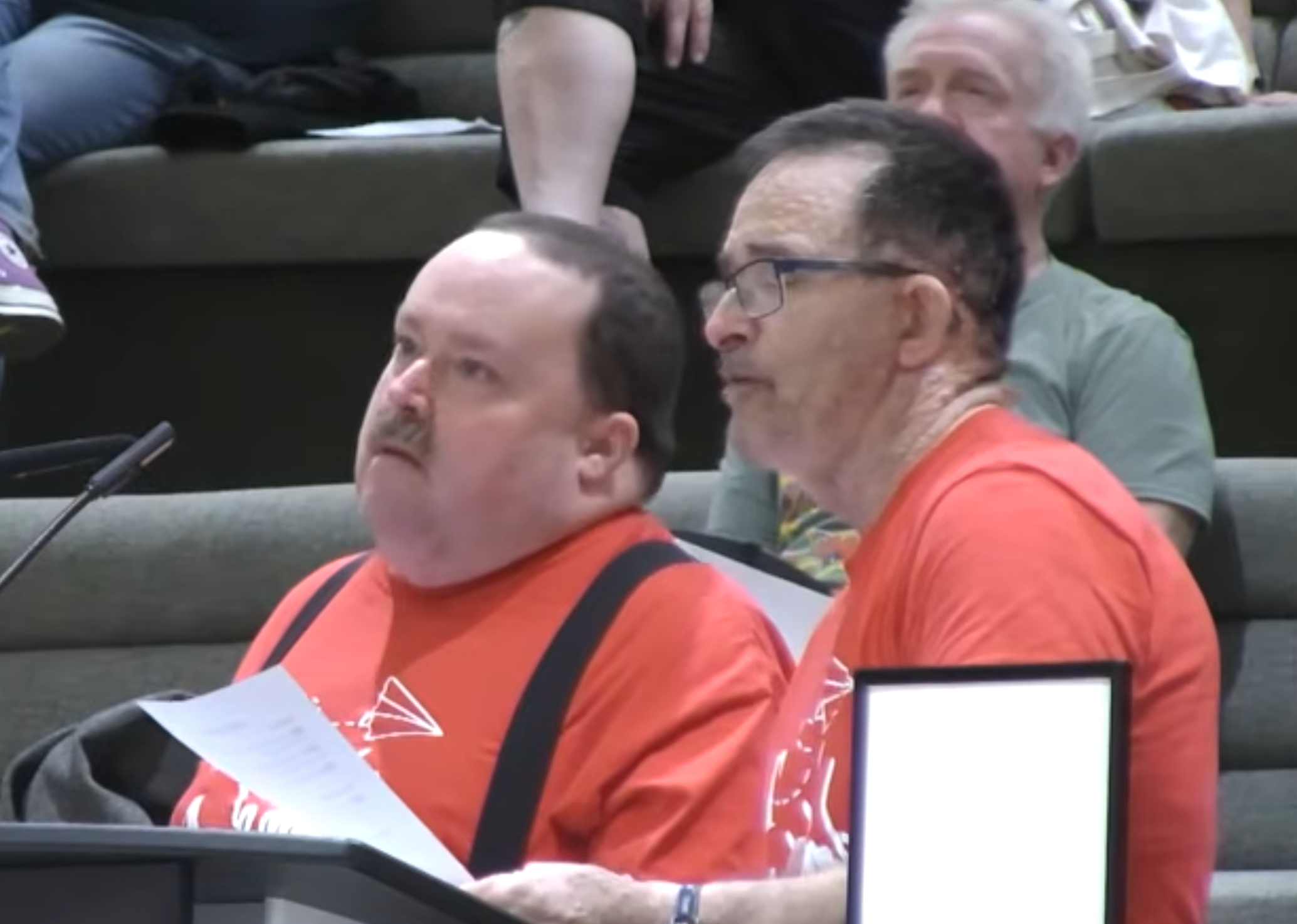
The Action Group (TAG) members John Steer, left, and Larry Fuchs addressing council Monday evening. (Screenshot courtesy of City of Medicine Hat)
Navigating the city has long been an issue for those with mobility issues council heard on Monday during its regular meeting.
“For as long as I can remember we have always had noticeable accessibility challenges around the city,” John Steer, chair of The Action Group (TAG), told councillors. “For example, the sidewalks, crosswalks, bussing system, bus routes as well as other general accessibility concerns.”
When it comes to sidewalks, Steer and TAG secretary Larry Fuchs, identified the need to ensure sidewalks are clear of ice and debris, are wide enough to navigate as well as addressing gaps in the sidewalk network.
Concerns regarding sidewalks have also been raised to councillors over the past year and a half by city staff, often in relation to prioritization of dealing with gaps over building a multi-use trail to the Heron Crossing neighbourhood.
The issue arose most recently during a Development and Infrastructure Committee meeting featuring the Heron Crossing trail held earlier this month.
And it’s the latest example of staff recommending prioritizing dealing with issues regarding the sidewalk network and other projects which conform to the municipality’s street design principles over the Heron Crossing trail which doesn’t. Staff highlighted 2.5 KM of sidewalk gaps in higher need areas could be addressed in lieu of the lower priority Heron Crossing trail.
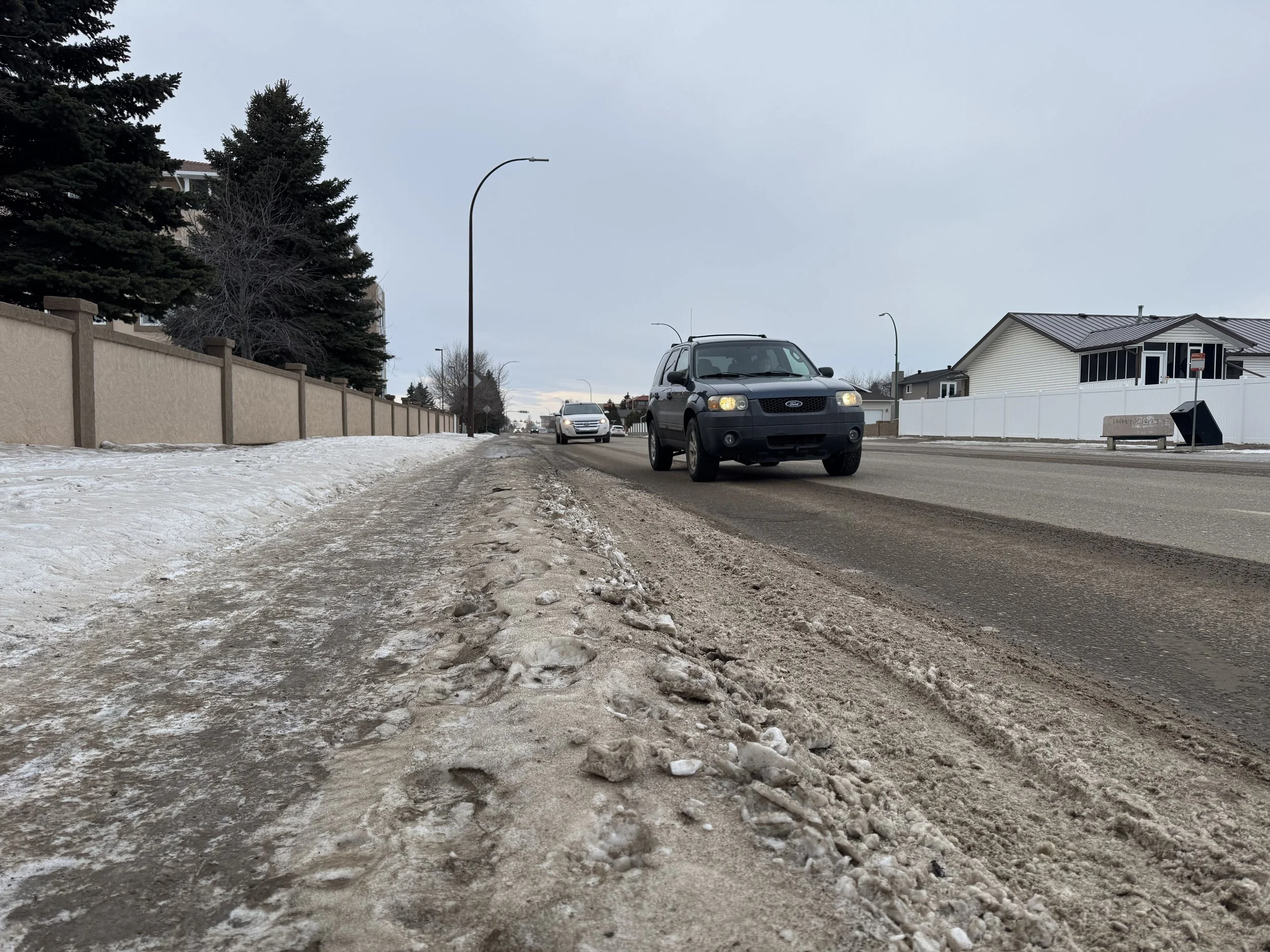
Despite Southview Drive being an area of high use of mobility devices, sidewalks are often left uncleared in winter. The pictured site is also adjacent to where a 82-year-old woman was stuck and killed by a motor vehicle in August 2024 near an unlit crosswalk. (File photo)
Despite those recommendations, council is currently proceeding with the Heron Crossing trail – a project which ranks 77th on the city’s 97 item priority list – and is awaiting a budget amendment approval with city staff again recommending not to proceed.
The visibility of crosswalks was also raised as an issue by TAG.
“Crosswalks in Medicine Hat are really hard to find,” Steer told councillors, adding the situation makes it difficult to reach transit stops. “Making crosswalks more visible with taller signs would help.”
Fuchs added current lit crosswalk markings are difficult for drivers to see, “which can cause a lot of pedestrian accidents.”
But Steer singled out bus service as one of the biggest mobility challenges when it comes to service times for adaptive and regular transit being limited with Fuchs noting Hatters only pay 10 cents less than those accessing Toronto transit.
“Being able to access the transit system should be more accessible and easier to navigate for everyone,” Steer told councillors. “Going to Co-op Place to watch the Tigers play is impossible unless you know someone who drives.”
Despite being open for more than a decade, there remains no regular transit to Co-op Place nor any sidewalk or trail connecting the city facility to existing networks.
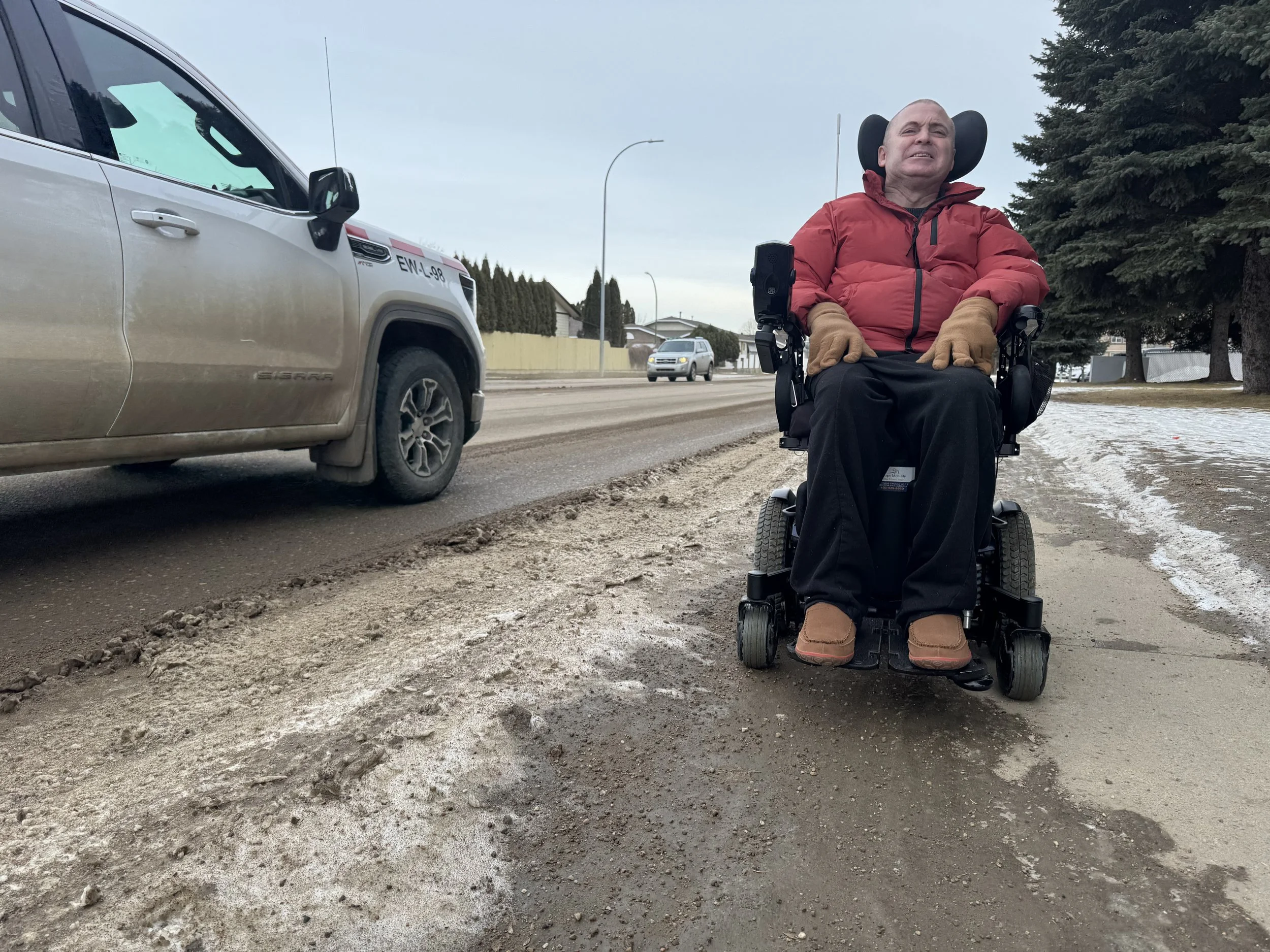
Trevor Knickerson navigates the sidewalk on Southview Drive last winter and commented to the Owl about accessibility challenges in the neigbhourhood. (File photo)
Venues for the upcoming Special Olympics which the city is hosting also have accessibility deficiencies with Panorama Lanes not having automated doors while Co-op Place’s accessible transit spaces are far from the entrance to the facility, according to TAG.
“We should welcome athletes to our city, not restricting them,” Steer told councillors in highlighting that Panorama Lanes will be one of the most utilized venues.
Coun. Brian Varga indicated he wasn’t aware of the issues at Panorama Lanes and committed to try to address the issue prior to the Special Olympics coming to the city in August.
In response to questions from Coun. Stu Yooung about coordinating the city’s different transportation strategies and plans, acting Public Service’s director Leah Prestayko told councillors the city’s Recreation and Transportation master plans address accessibility.
Additionally, there is a working group at the city for accessibility and inclusion that meets with staff monthly, “and we really look to them for guidance on where we should address and direct our resources first,” Prestayko told councillors.
She also noted that accessibility audits have been done on city facilities with actions on improving conditions underway while funds are available to improve bus stops available in this year’s budget.