

Medicine Hate: Leaders Need To Break The Silence
Medicine Hat - About 50 community members and local leaders including City Councillor Bill Cocks and Inspector Jason Graham from the MHPS (Medicine Hat Police Service) gathered for a full-day workshop on Wednesday to talk about a difficult subject: hate in the city. The free event ran from 9 a.m. to 3 p.m. It was called the
StopHateAB Anti-Hate Community Outreach Project.
For decades, many Albertans kept their racist, homophobic, or transphobic views private - muttered at home but not voiced in public. Today, that has changed. Political leaders refuse to disavow hate. Provincial legislation targets trans youth. No anti-racism strategy exists. Police forces lack hate crime units. In this vacuum, elders who once stayed quiet now feel emboldened. And youth - watching, listening - learn that hatred is acceptable. What was once hidden behind closed doors is now shouted at school boards, Pride parades, and community meetings.
The Owl will step up first and say
The Owl does not look away.
The Owl does not stay silent.
The Owl stands against hate.
Speakers
The workshop featured three speakers:
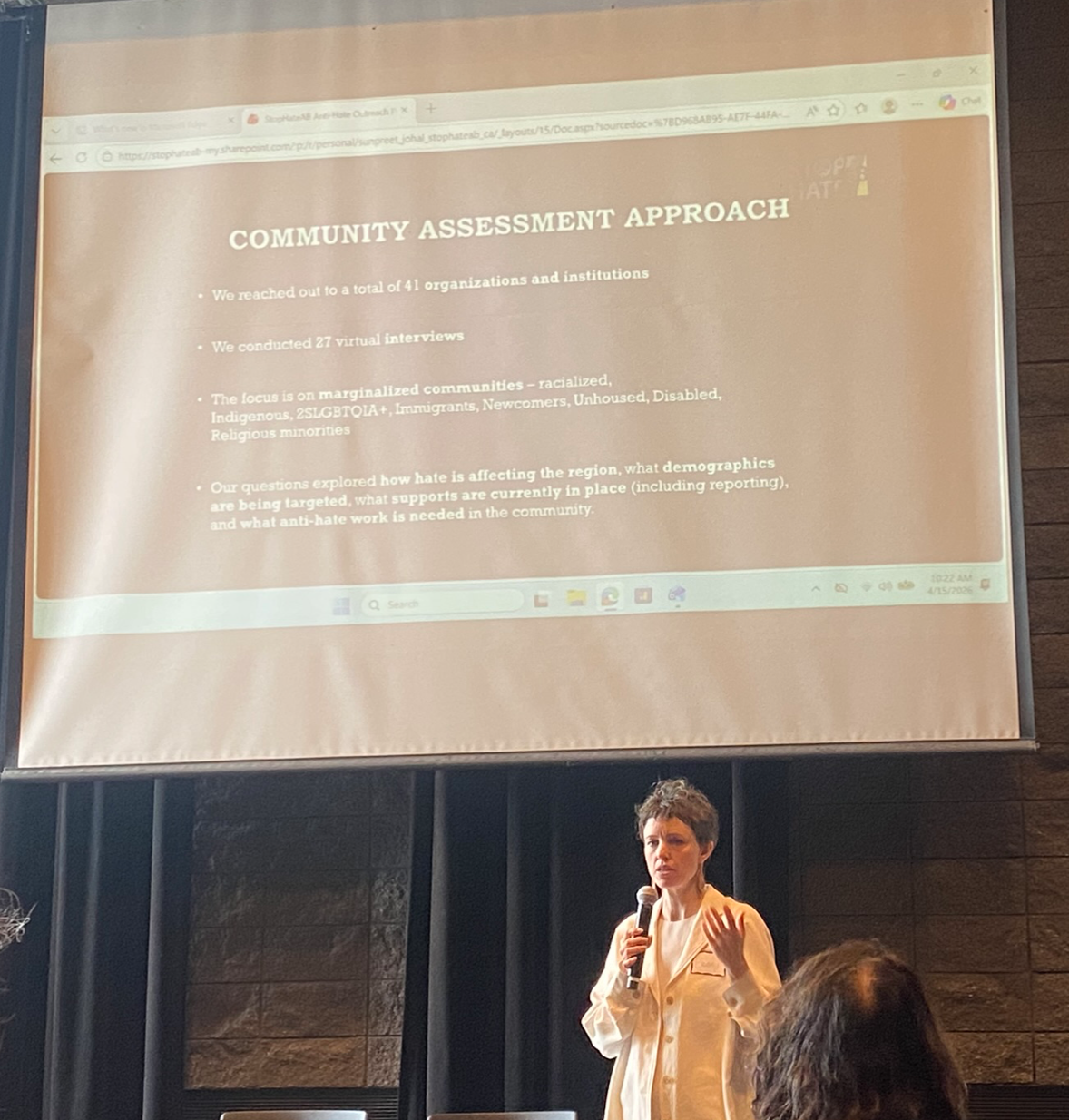
Jenny Mae Smith is the Provincial Anti-Hate Community Engagement Specialist for StopHateAB. She is originally from Medicine Hat - her grandfather homesteaded near here. She moved away after high school and now lives in Calgary.
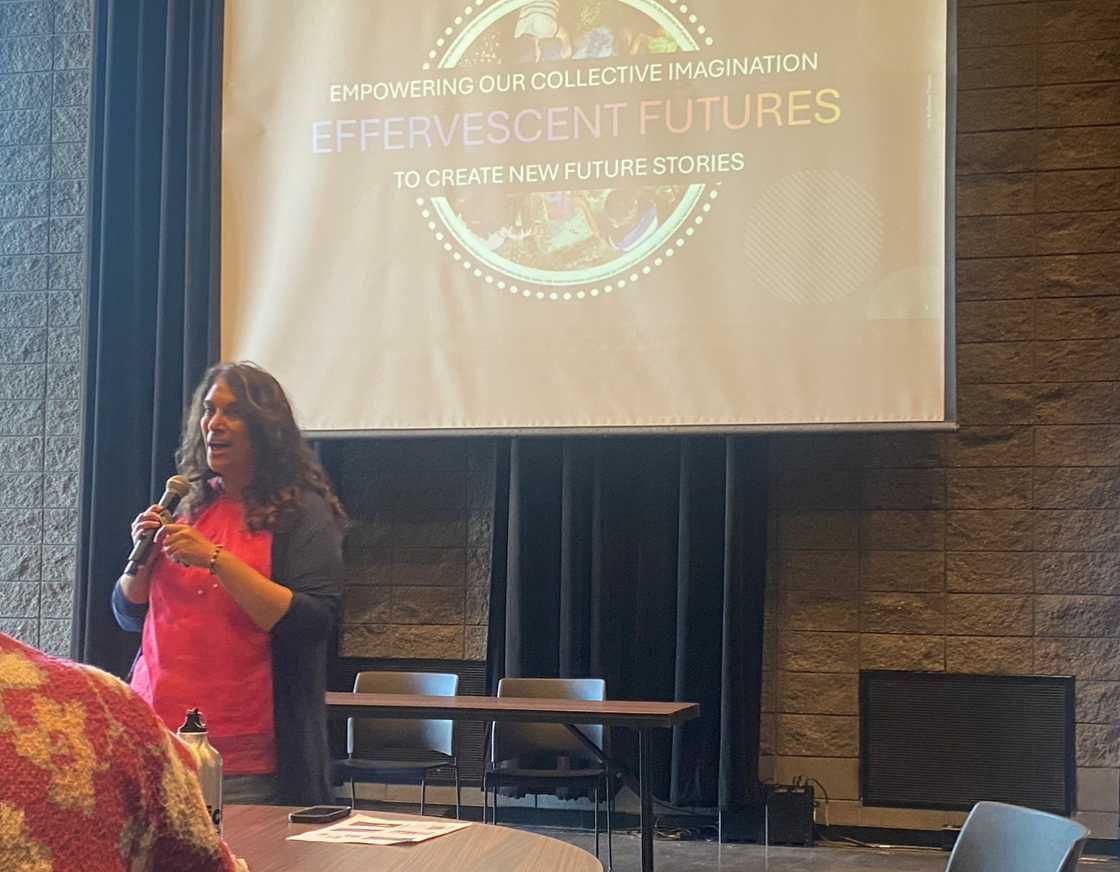
Jeny Mathews Thusoo is co-founder of Effervescent Futures. She is a Program Lead for Resilience & Futures with the City of Calgary, where she leads Inclusive Futures work focused on building trust between institutions and equity-deserving communities. She also teaches graduate-level social work at the University of Calgary.
During her presentation, Thusoo shared a quote from author Arundhati Roy:
There's really no such thing as the 'voiceless'.
There are only the deliberately silenced, or the preferably unheard.
That idea - that people are not born without a voice, but are often ignored or pushed aside - ran through much of the day's conversation.
Stephen Camp is Project Director at the OPV (Organization for the Prevention of Violence). He is a 30-year veteran of the Edmonton Police Service who helped create the EPS Hate Crime Unit and played a key role in dismantling White Supremacist groups.
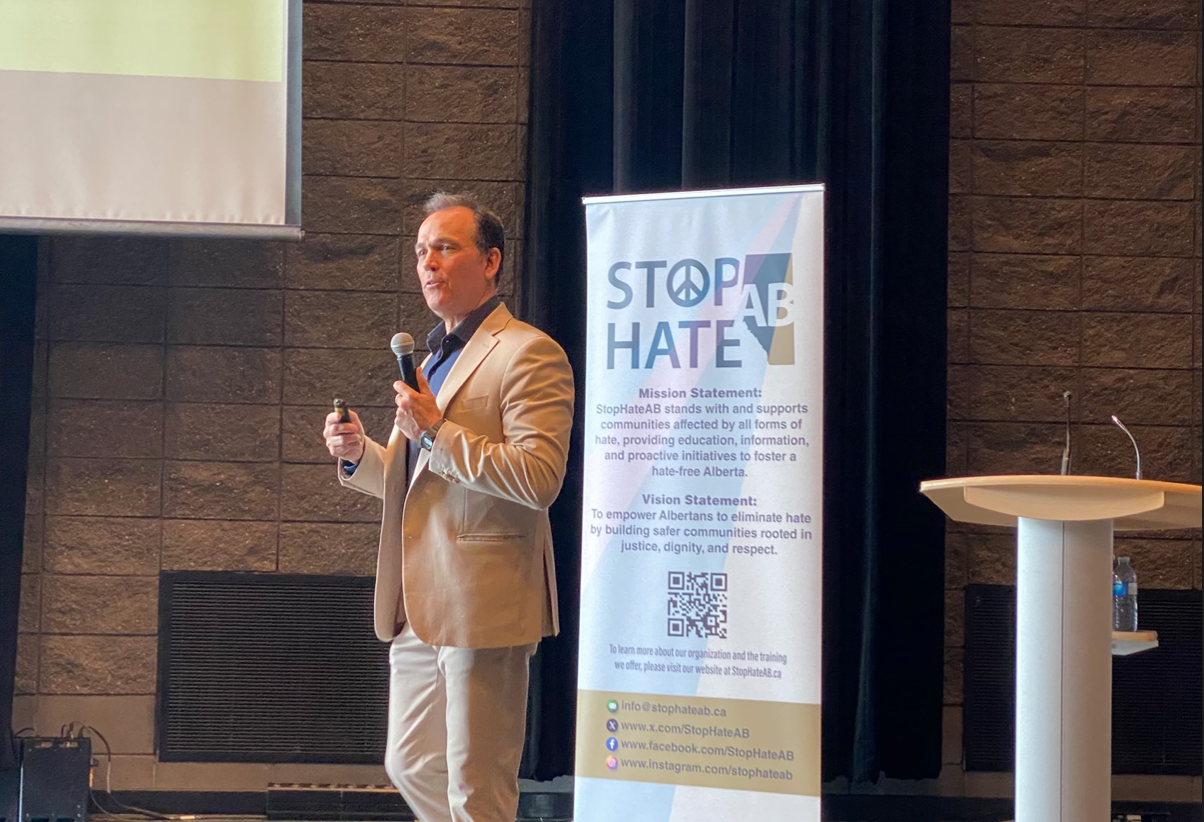
Camp told the group that OPV has been working with the federal government on Bill C-9, the Combating Hate Act - a proposed law that has not yet been passed. He said he was very proud of the work they had done.
Types of hate
The workshop made a clear distinction between:
Hate crimes - actions that break the law, such as assault or vandalism, motivated by hate
Hate incidents - hurtful or hateful actions that do not rise to the level of a crime, but still harm individuals and communities
Both are serious. But incidents are even less likely to be reported, and police often have no formal way to track them.
Hate is real in Medicine Hat
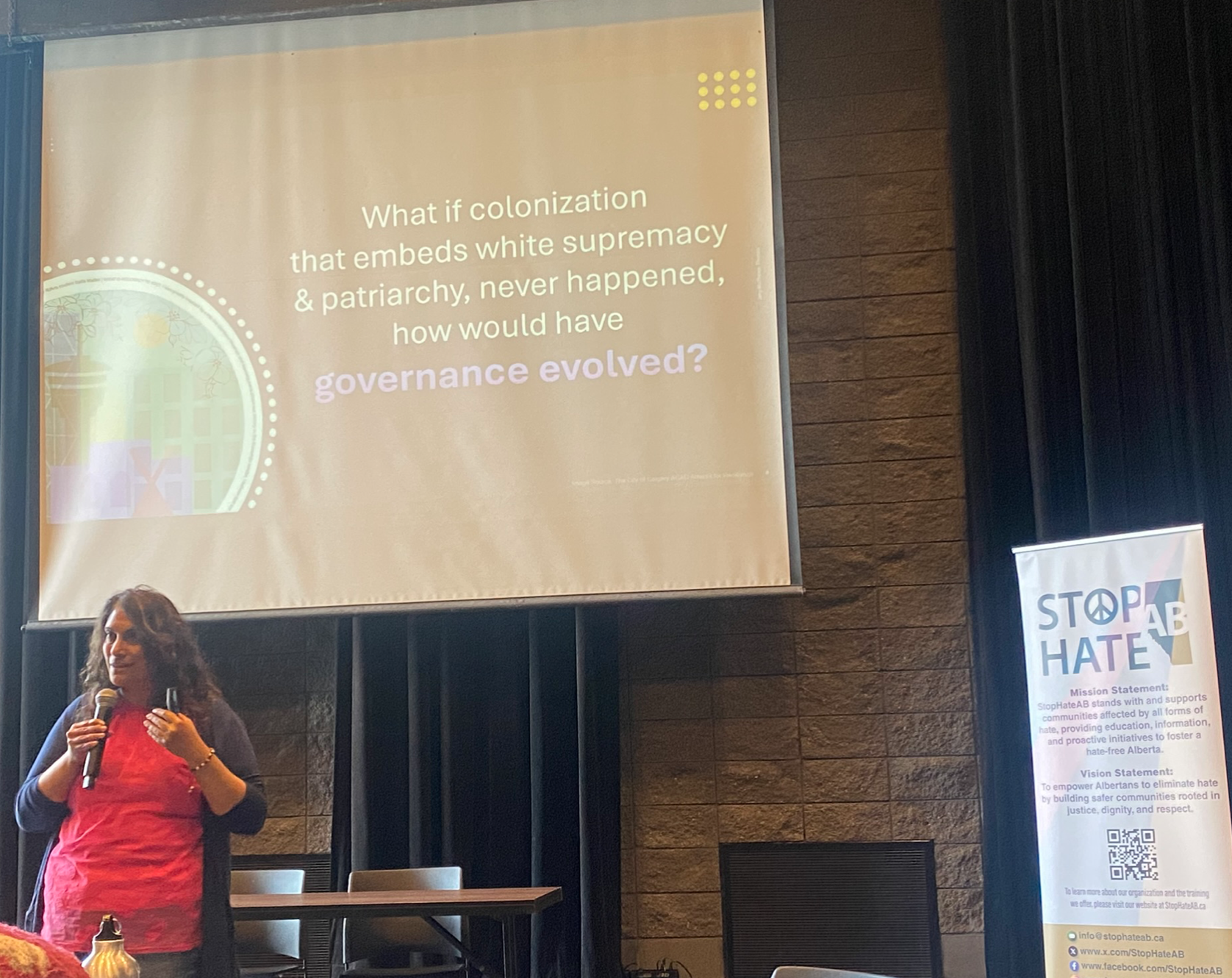
Apr 15 2026 Jeny Mathews Thusoo Speaks
Speakers and participants acknowledged that racism and hatred are present in the city - not just in big centres like Calgary or Edmonton. People are targeted because of their skin colour, religion, where they were born, their identity, or because they are unhoused.
One of the concepts discussed was imagining how societies might have evolved without colonization. This line of thinking helped participants reflect on how historical violence and displacement continue to shape discrimination today.
The event also raised concerns about temporary foreign workers. They are at risk of abuse on the job - including hate-motivated treatment - but the abuse often goes unaddressed because workers end up going back home before anything can be done.
Silence is part of the problem
A major theme throughout the day was that too many people are staying quiet. Hate exists in Medicine Hat, but most people do not talk about it.
They look away.
They stay silent.
And that silence allows hate to grow.
It was noted that when leaders are silent, the message sent to hatemongers is that their behaviour is acceptable - or at least that no one will challenge it. Without public condemnation from elected officials, police leadership, and other community figures, victims of hate are left feeling abandoned, and perpetrators feel emboldened.
Hate crimes/incidents tend to rise when government remove protections for marginalized communities - here’s how 6 provinces measure up.
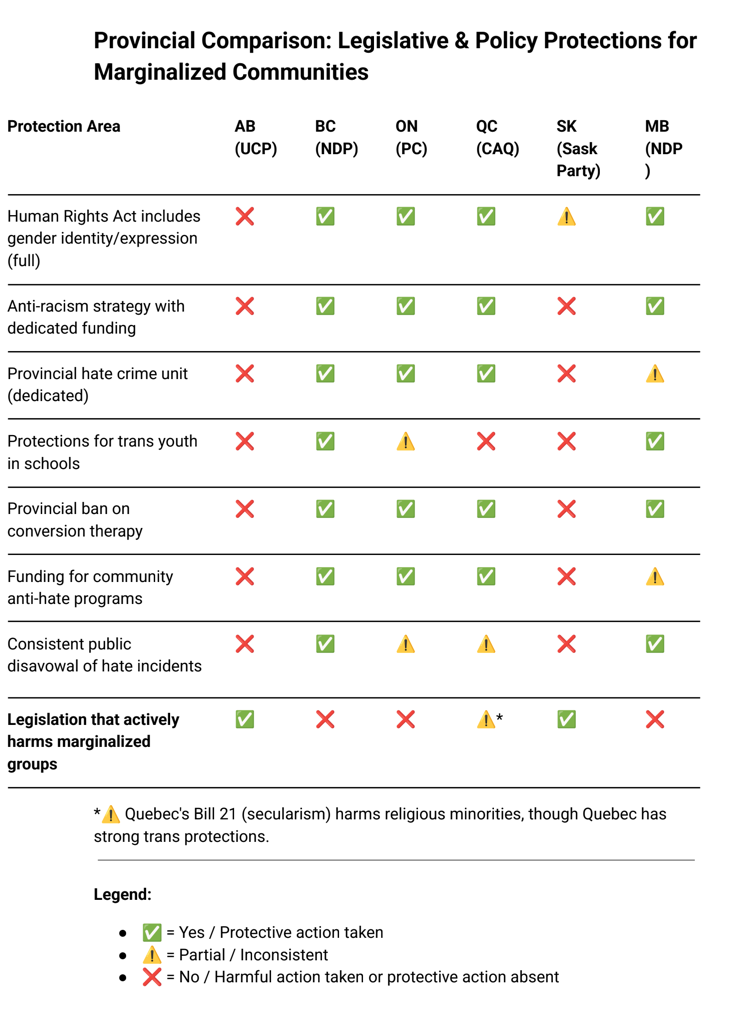
Created by Kelly Allard April 16 2026
Concerning findings from the Medicine Hat Report
Earlier this year, StopHateAB published the Medicine Hat Report based on interviews with local organizations. The findings are worrisome. Medicine Hat ranks in the top five communities in Alberta for self-reported hate crimes and incidents.
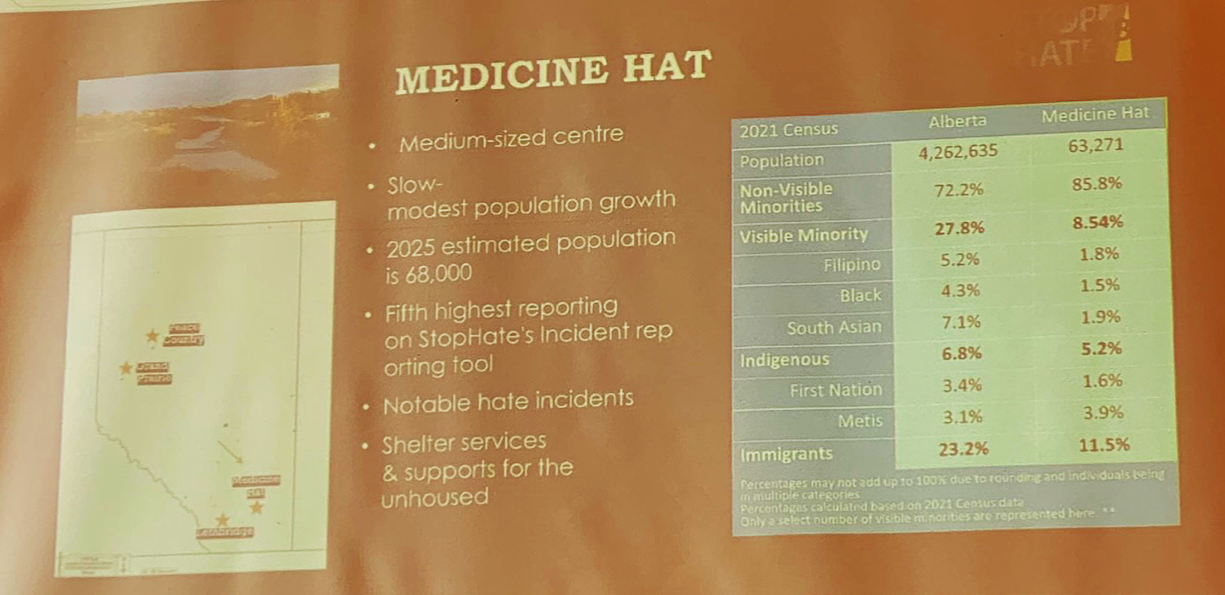
From Apr 15 2026 presentation
The report also found that racists and hatred have become emboldened. Hateful comments that used to stay in the shadows are now spoken openly in public spaces, online, and even by politicians. Some politicians have jumped on the bandwagon, putting blame on immigrants and asylum seekers for problems like housing shortages or crowded schools. These messages make hate feel acceptable to more people.
A past example: homeless shot with BB gun
A post from Niitsitapi Kookums, a local group that advocates for and feeds street people, described an attack from October 2025:
Last night in Medicine Hat, something heartbreaking and deeply disturbing occurred. While our Eagle Team Patrols were out doing what they always do - offering supplies, kindness, and dignity to our street family - a blue truck drove by. Inside were a male and female Caucasian pair who opened fire with a pellet gun.
This was not random. This was a targeted attack - aimed directly at the street folk and the volunteers who were serving them.
Among our team was a child. After the quick thinking of one of our Eagle team members, the child was quickly blocked. However, the team member took several shots to the back of the head and in the buttocks."
The group said their street community endures this kind of hatred weekly, sometimes daily. A police report was filed, but local police took about three weeks to ask the public for help in identifying the truck in a photo that was taken.
Problems with the law
The workshop highlighted that Canada's Criminal Code is lacking. There are very few actual hate crimes in the legislation. Most of what exists covers hate propaganda, not the full range of hate-motivated actions people experience.
Not all nasty or hateful language is criminal. The legal threshold for prosecuting hate-related speech is very high.
A big problem: underreporting
One of the biggest challenges discussed was underreporting. Many people who experience hate do not report it to police. Some are afraid. Some don't think anything will be done.
Others are not sure if what happened counts as a "hate crime."
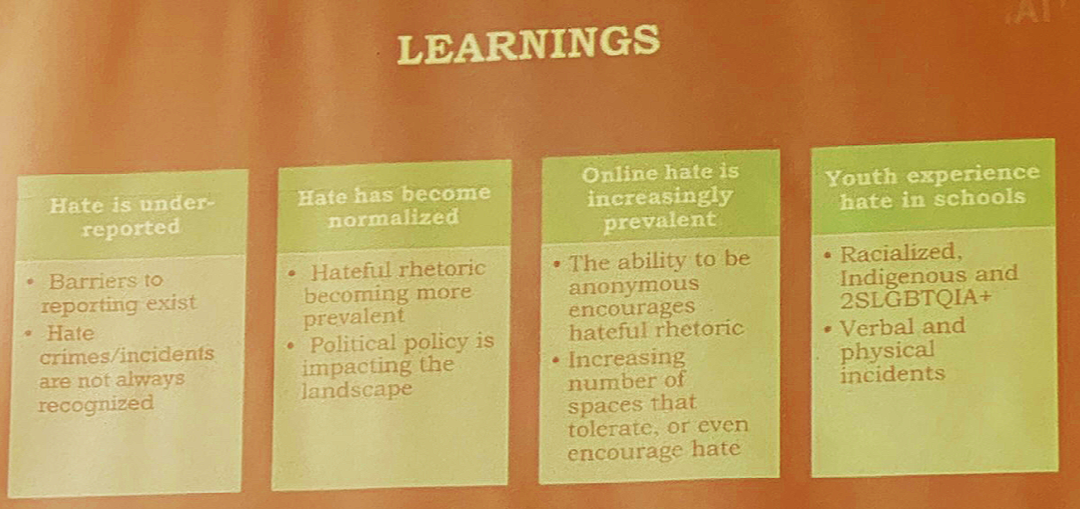
From Apr 15 2026 presentation
Police departments often do not create policies around hate because they have very few reports. The message from the workshop was clear: if everyone reports, police will be more likely to create policies to address the problem.
Without reports, it is hard to understand how much hate is really happening in Medicine Hat.
Did You Know? Witnesses can report hate crimes and hate incidents - not just victims.
Police need better training
All too often, people who experience hate have to educate police officers about hate crimes and incidents. Camp noted that cisgender white male officers often have little to no insight into the experiences of marginalized communities. This is why training of police services is so important.
About the organizations
StopHateAB is a non-profit organization made up of government, law enforcement, and community partners. It was formed in 2001 after the 9/11 attacks. Its goal is to raise awareness and education about hate crimes and incidents in Alberta. StopHateAB also runs an online reporting tool where people can document hate incidents. However, if you have experienced a hate crime, you should still report it to your local police.
The Organization for the Prevention of Violence (OPV) is a non-partisan, expert-led NGO focused on public safety. Its Hate Crimes Centre provides training, tools, and strategies for police, communities, and governments.
The Owl could not find a website about Effervescent Futures.
What's next
The workshop was part of a broader effort to build local capacity to respond to hate.
Organizers said community education, better reporting pathways, and stronger partnerships are all needed.
A follow-up initiative - an Anti-Hate Coalition for Medicine Hat - is expected to form in the coming months.
