Denim Day 2026: Myths and Realities of Sexual Assault Survivors
By Kelly Allard
Denim and Silence: What We Get Wrong About Survivors
This article is about females because I am a woman and that is what I know. Sexual assault happens to people of all genders, and the myths I describe are not exclusive to women. But I will not pretend to speak for experiences I have not lived; I will leave that to others.
Trigger Warning: This article discusses sexual assault, child sexual abuse, coercion, grooming, and trauma responses. It includes descriptions of myths and misconceptions about survivors that some readers may find distressing. Please take care of yourself while reading. If you need support, resources are listed at the end.
The Last Wednesday of April is Denim Day
Just Ahead of Sexual Violence Prevention Month in May
I will wear denim this Wednesday.
(Okay, I wear denim every day but on this day, it has a special meaning.)
Denim Day began as a protest
In 1999, the Italian Supreme Court overturned a rape conviction because the victim wore tight jeans. The court reasoned that she must have helped her attacker remove them, and therefore, she must have consented. Women across the world wore denim the next day in outrage.
That was 27 years ago. And yet, here in Alberta in 2026, we are still fighting the same battle - not just over what survivors wear, but over how we expect them to act, how we judge their behaviour, and how we fail to understand the most basic truths about trauma.
May is Sexual Violence Prevention Month. But prevention requires understanding. And too many people - including decent, well-meaning people - do not understand the first thing about how survivors actually respond to abuse.
Let me clear up a few myths.
Myth #1: "There would have been signs."
This is one of the most persistent and damaging assumptions. Many people believe that if a female is being abused - whether she is a child, a teenager, or a grown woman - surely someone would know - a parent, a sibling, a friend…
Surely there would be signs. Something obvious.
That is not how abuse works.
Survivors become expert concealers. Especially girls and young women. From a very young age, females are taught to manage the emotions of others - to be agreeable, to not make waves, to smile when they're uncomfortable. Hiding pain becomes second nature. By the time a girl is a teenager, she can be falling apart inside and still say "I'm fine" with a perfectly steady voice and head held high.
Abusers are also expert groomers - not just of the survivor, but of the entire family. The grandfather in the hayloft who asked two 12 year old girls if they wanted to hump? Everyone thought he was a "nice old man." The coach, the uncle, the family friend - they work to appear trustworthy while isolating the child. They tell the child: "This is our secret. Nobody will believe you. And if you tell, you'll ruin the family."
The most common sign of child sexual abuse is no sign at all.
Myth #2: "She would have seemed upset."
Many people assume that a survivor would show obvious distress.
Crying. Shaking. Visible trauma.
That is not how trauma always works.
Many survivors dissociate or shut down. They go numb. They go through the motions - school, work, dinner conversation - while feeling nothing. To an outside observer, they look "fine." Maybe even "good." Because they have learned that showing pain is dangerous.
Some survivors laugh nervously when disclosing abuse. Some smile. Some speak in a flat, detached monotone. Police and prosecutors have had to be trained repeatedly that there is no "right way" to act after trauma.
Crying, screaming, silence, jokes, professionalism, dissociation - all of it is normal.
If you are expecting a movie performance, you will miss the real survivors standing right in front of you.
Myth #3: "She would have said no."
This assumes that "no" is always safe to say.
In an abusive relationship, saying no can trigger violence, punishment, abandonment, blackmail, or worse. Survivors learn quickly that compliance is safer than resistance. They may say yes - even enthusiastically - not because they want to, but because the cost of refusal is too high.
Some survivors say "please" and "I want this" and "more" - and they mean none of it. They are performing. They are doing survival arithmetic: If I say no, what will happen? If the honest answer is anything other than "he will respect it and nothing bad will happen," then any yes that follows is not freely given.
This is sometimes called enforced enthusiasm. And it is far more common than most people realize.
Consider Linda Lovelace. In the 1972 film Deep Throat, she became the face of female sexual liberation - enthusiastic, eager, seemingly in control. She said later that she was beaten, threatened at gunpoint, and forced to perform. On screen, she looked like she was having the time of her life. In reality, she was a survivor of horrific abuse and coercion. The performance was survival. That is what enforced enthusiasm looks like.
Or consider the married woman whose husband comes home drunk. He wants sex; she does not. But saying no means a fight - an hour of arguing, accusations of not having sex with him because she is actually fucking someone else or she is a heartless bitch or or or …
Saying yes takes ten minutes. He passes out. She lies awake.
That is not consent; that is surrender. And she is not the only one - millions of women have made that same calculation, on thousands of nights, in perfectly "normal" marriages. The law may not call it assault, but she knows the truth: she did not want to.
Myth #4: "She would have told someone."
Many survivors try to tell and are not believed. Many are threatened into silence. Many are too ashamed to speak. Many do not even have the words to describe what happened to them - especially children who were never taught the proper names for their body parts.
I had a close friend years ago (nowhere near Medicine Hat); she had three sisters. Their grandfather lived in the same house. I did not find out until I was in my 40s that he had sexually assaulted every single one of them. Decades of silence because they thought no one would believe them, because everyone thought he was such a "nice old man."
Silence is not evidence that nothing happened.
Silence is evidence that the abuser did his job.
Myth #5: "She kept going back. it couldn't have been that bad."
This is perhaps the most dangerous myth of all.
Survivors stay with abusers for many reasons: fear, financial dependence, blackmail, threats to children, isolation, grooming that began when they were children themselves, and the simple, devastating reality that leaving is often more dangerous than staying.
The most dangerous time for a victim of intimate partner violence is when she tries to leave. That is when she is most likely to be killed.
So she stays.
She performs. She goes to dinner with him. She smiles at family gatherings. She seems "fine."
When she finally escapes, someone asks: "But you kept going back. Why didn't you just leave?"
Because leaving is not a door, it is a minefield; not everyone survives the crossing.
Myth #6: Victims are easy to spot.
Many people think that a woman who has survived a sexual assault will show what they consider to be classic signs of abuse and someone who doesn't value herself - hunched over, hiding her face, avoiding eye contact, messy hair, no makeup, and wearing frumpy clothes. Many think someone who has been abused should be in the fetal position, sobbing uncontrollably.
They are so wrong.
Sometimes that woman looks like the strongest person in the room, looking fabulous.
Some women sleep with many partners and say "I am powerful, I am strong, I do what I want." But underneath, sex has become just another Tuesday. A transaction. A tool. Someone else took the choice away from them at some point, so now they use sex to get what they need. They have stopped believing in the myth of lovemaking. Sex is not special. It never was. So they cut through the pretense and use the transaction for their own purposes. Not because they are broken. Because they understand the game now.
To be clear: Many women sleep with many partners because they genuinely enjoy sex. Full stop. No trauma required. That is their business and nothing to judge.
The point is that you cannot tell someone's internal state by their external behaviour. The same action - having multiple partners - can come from radically different places. Assuming you can tell the difference is exactly the myth this article is trying to break.
Myth #7: "She would have fought back."
The "fight or flight" response is only part of the story. There is also freeze and fawn.
Freeze: The body locks up. You cannot move, cannot speak, cannot scream. This is a neurological response, not a choice.
Fawn: You try to appease the attacker. You smile. You cooperate. You say whatever you need to say to survive the moment.
Neither freezing nor fawning is consent. Both are survival strategies and both are incredibly common.
The idea that a "real" survivor fights back, screams, leaves bruises on her attacker - that is Hollywood. Real survivors often do none of those things; they spend years afterward blaming themselves for not doing more.
They should not.
The only person to blame is the one who chose to harm them.
Myth #8: "If it really happened, she would report it immediately."
Reporting sexual assault is terrifying. Survivors know that they will be questioned, doubted, and often blamed. They know that conviction rates are low. They know that their mental health, their behaviour, their clothing - everything about them - may be scrutinized. In Canada, their sexual history is generally off limits unless the defence files a Section 276 application (often called a "rape shield" hearing). Even applying to bring up that history is traumatic in itself. The process can feel like another assault.
Many survivors decide it is not worth the cost and never report at all. Those who do often take months or years to come forward. That delay is not evidence of a false claim. It is evidence of fear, shame, and the very real risk of not being believed.
When a survivor does come forward - no matter how much time has passed - the only appropriate response is to listen, to believe, and to support.
What Prevention Actually Looks Like
May is Sexual Violence Prevention Month. This year, let prevention mean something real.
It means teaching children the proper names for their body parts - so they have the words to tell if something happens.
It means believing survivors when they speak - even when they don't act the way you expect.
It means understanding that trauma responses are varied, confusing, and often counterintuitive. There is no "right way" to be a survivor of sexual assault.
It means stopping the questions: "What were you wearing?" "Why didn't you fight back?" "Why did you stay?" "Why didn't you tell someone sooner?"
And it means putting the blame where it belongs: on the person who chose to commit the assault. Not on the person who survived it.
Denim Day Reminds Us Why This Matters
Denim Day began because a court said a woman in tight jeans must have consented. That same logic - "she seemed fine, she didn't fight, she must have wanted it" - haunts sexual assault cases to this day.
To the survivors reading this: I see you. I believe you. And I am sorry that we still have to have these conversations in 2026.
To those who don't understand why a survivor might seem "fine," who wonder why she didn't just say no or leave or fight back: Learn. Listen. Believe. Because the woman in your life - your mother, your sister, your daughter, your friend, your colleague - may be wearing a mask of strength right now. And you might be the only person who can offer a safe place for her to take it off.
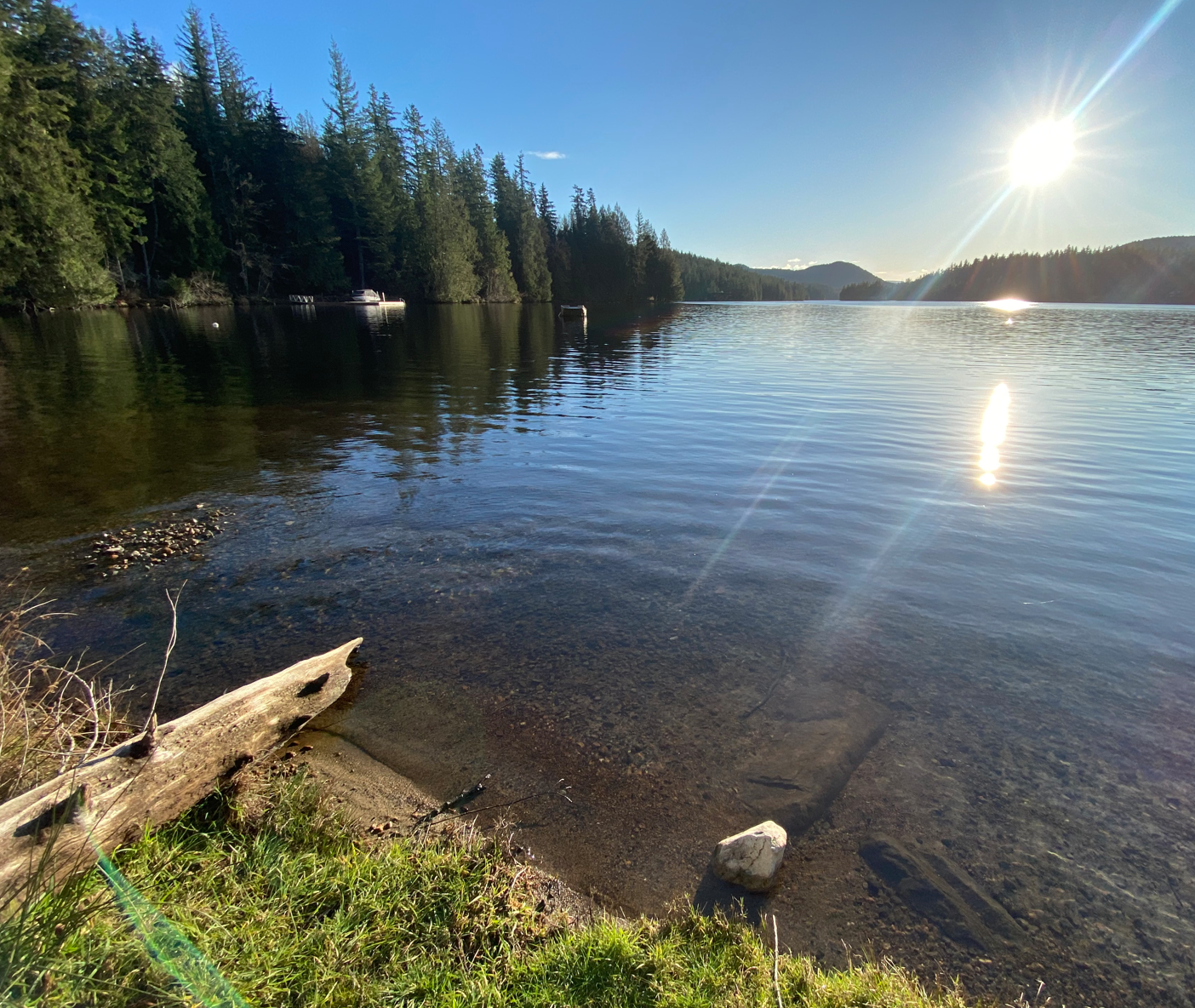
Sakinaw Lake BC - Photo Kelly Allard
How do I know these are myths?
Because I have lived them.
All eight of them.
The woman next to you that you think you know - the one who seems fine, who gets the job done, who makes jokes and never complains - she may have hidden horrors in her past. You would never know.
That is what survival looks like. It looks ordinary. It looks unremarkable. It looks, from the outside, like nothing ever happened.
This Is Why We Choose the Bear
A few years ago, a question went viral online: "Would you rather be alone in the woods with a man or a bear?" Most women said the bear. Many men were confused, even offended.
"Not all men," they said. "You can't assume all of us are dangerous."
We do not know which men are safe.
The bear is predictable.
The bear will not pretend to love us first.
The bear will not groom our families.
The bear will not wait until we are vulnerable, or drunk, or alone, or afraid.
The bear will not blackmail us or threaten to ruin us if we tell.
Saying "not all men" only comforts the men.
The man who seems kind, who volunteers at church, who donates to the women's shelter, who everyone thinks is a "nice old man" - that man can be the most dangerous one of all.
Here is something else women know but rarely say out loud:
The men who shout the loudest about "not all men" - the ones who are most offended that women choose the bear - those are the men we suspect the most.
A good man does not need to announce he is a good man.
A good man does not make our fear about his feelings.
A good man listens.
A good man learns.
So yes, we assume.
Because assuming keeps us alive.
The cost of being wrong is too high a price to pay.
Wear denim on Wednesday. Stand with survivors; stop believing the myths.
Where to Get Help – Alberta & Nationwide
If you or someone you know needs support, these services are available across Alberta and across Canada. All are confidential.
Immediate Crisis Lines (24/7, Anywhere in Canada)
Emergency: 911 – If you are in immediate danger
Canada Suicide Crisis Helpline: Call or text 988 – Available 24/7, nationwide
Alberta's One-Line for Sexual Violence: 1-866-403-8000 (Call or text) – Free, confidential crisis support and referrals for anyone who has experienced sexual violence. Available daily 9am–9pm in over 170 languages. Email: mailbox@aasas.ca
Family Violence Info Line (Alberta): 310-1818 – 24/7, over 170 languages. Support for anyone experiencing family violence, or for those concerned about someone who may be.
Abuse Helpline (Alberta): 1-855-443-5722
Child Abuse Hotline (Canada): 1-800-387-5437 (1-800-387-KIDS)
Youth & Children
Kids Help Phone: 1-800-668-6868 or text CONNECT to 686868 – 24/7, confidential counselling for youth.
Children's Mental Health Crisis Line (Alberta): 780-427-4491
Indigenous Peoples
Hope for Wellness Helpline: 1-855-242-3310 – 24/7 culturally sensitive crisis counselling for Indigenous Canadians in English, French, Cree, Ojibway, and Inuktitut.
2SLGBTQIA+
2SLGBTQIA+ Support Line (Alberta): 1-844-702-7483 – All ages
Mental Health & General Support
211 Alberta: Call, text, or chat 211 – If you are unsure who to call or what service you need, 211 connects you to a real person who will talk to you about your situation and refer you to the right program.
Alberta Mental Health Helpline: 1-877-303-2642 – 24/7
Health Link (non-emergency health advice): 811 – Available 24/7
Finding Local Services Across Alberta
Victim Services Units (Alberta): Visit the Government of Alberta website to find a victim serving organization near you. These funded programs provide information, support, and referrals for victims of crime in communities across the province.
Association of Alberta Sexual Assault Services: Visit their website to find sexual assault support centres in your region.
Medicine Hat & Area Specific Resources
Sanare Centre – Individual and group therapy for anyone over 6 who has experienced sexual violence.
Phone: 403-548-2717
Address: Unit 2, 36 Strachan Court SE, Medicine Hat
Sexual Assault Response Team (SART) – Medicine Hat Regional Hospital – Medical care, support, and forensic exams for recent assault (within 96 hours).
Location: Emergency Department, 666 5 Street SW, Medicine Hat
Phone: 403-529-8000
Medicine Hat Women's Shelter Society – Safe shelter, advocacy, and support for individuals and families experiencing family violence.
Phone: 403-527-8223
Musasa House (Second Stage Shelter) – Longer-term shelter program.
Phone: 403-529-1091
Safe Families Intervention Team (SFIT) – Partnership between Medicine Hat Police Service and the Women's Shelter Society.
Phone: 403-529-8463
Email: SFIT@mhps.ca
If you are in immediate danger, call 911.