

River Update #1 - South Sask. Levels Rising But Still Far From Record Levels
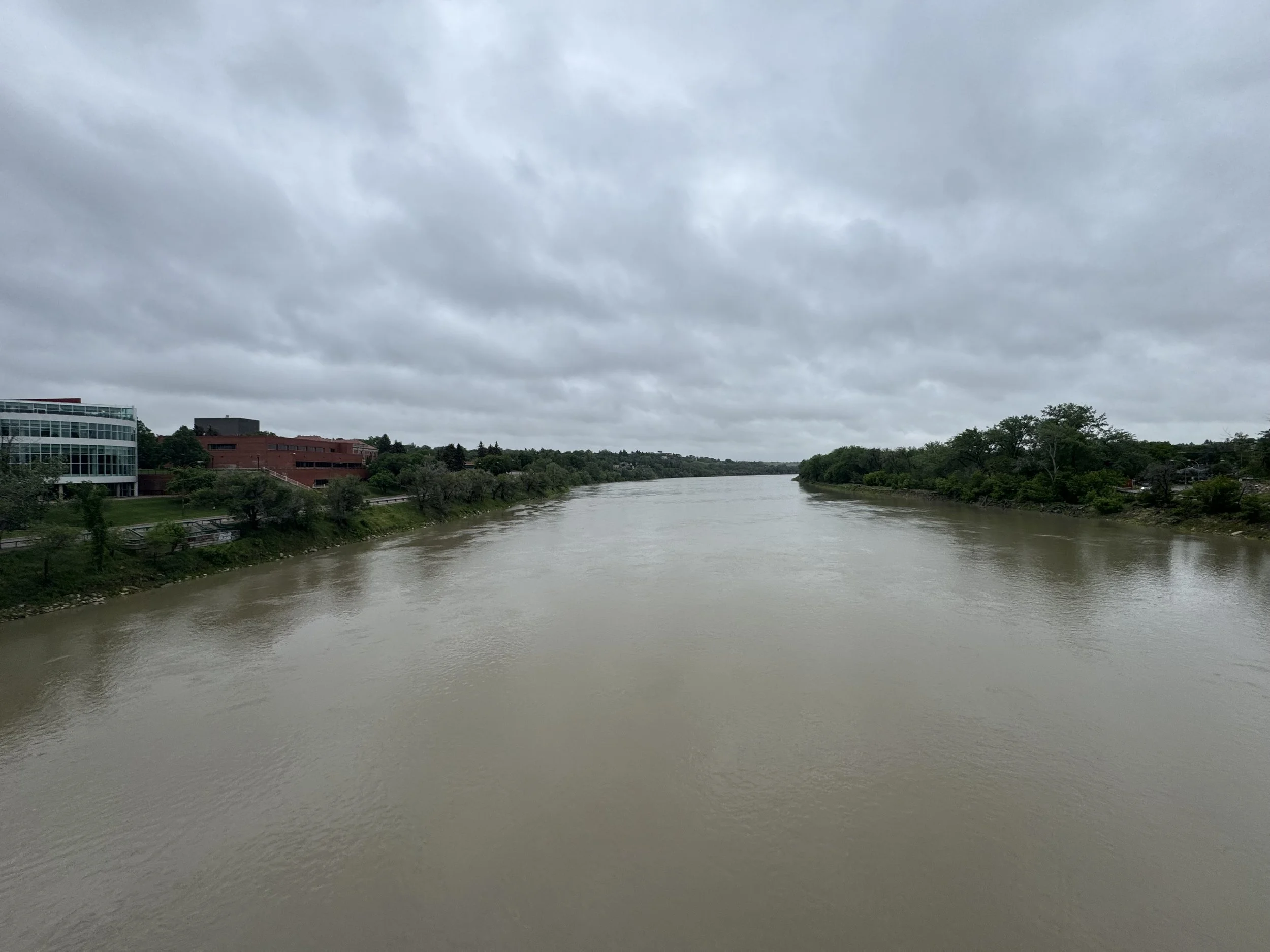
The South Saskatchewan River on Sunday evening. As of early Monday morning, streamflows are nearing 600 metres per second, far from any record and within normal peak spring runoff levels. (Photo Alex McCuaig)
For several years now the South Saskatchewan River at Medicine Hat has run shallow with drought conditions being prominent and upstream reservoirs sucking up much of the natural streamflow due to underperforming mountain spring runoffs.
This past weekend may mark a shift in downward trends for spring peak streamflows over the past decade but is far from flood levels in the city currently.
Streamflow levels since 2016 have only broken the 1,000 cubic metres a second (m3/s) mark twice in Medicine Hat, in 2022 when it reached a little more than that point and in 2020 when it hit it’s highest in a decade at 1,100 m3/s.
The South Saskatchewan hit one of its lowest levels ever since records started in 1910 when the peak streamflow for the year only reached 250 m3/s in 2023.
For context, the flood of 2013 saw the river top out at nearly 4,500 m3/s in Medicine Hat.
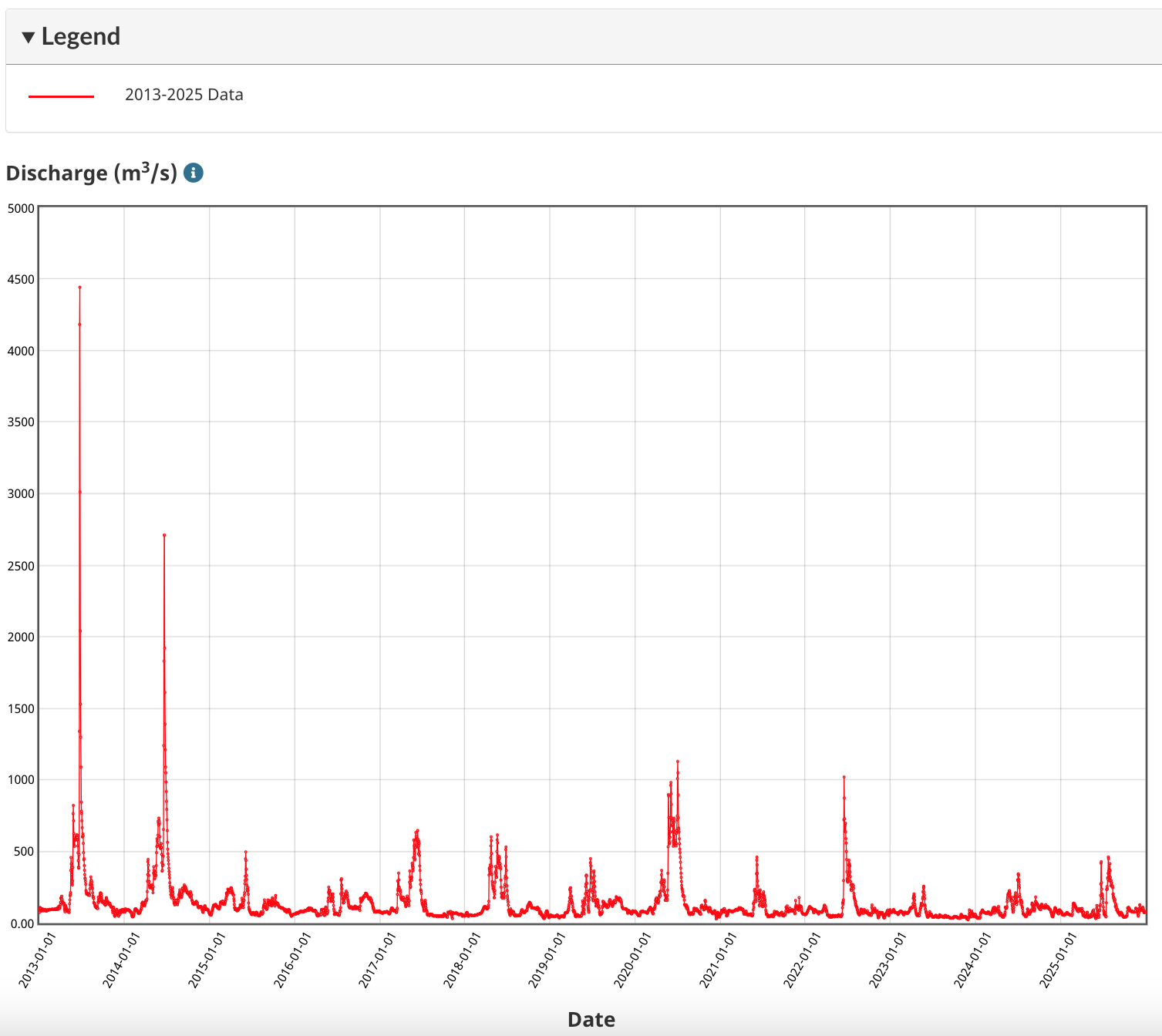
Streamflows for the South Saskatchewan River between 2013 to 2025. (Gov. of Canada)
As of early Monday morning, streamflows on the South Saskatchewan River went over 500 m3/s and are expected to continue rising over the next few days as water from the burgeoning Bow and Oldman basins along with their tributaries make their way downstream.
But a flood watch as well as multiple high streamflow advisories are now in effect.
Starting with the Bow River, a flood watch has been issued for Lake Louise with a high streamflow advisory being issued from Banff to the Ghost Reservoir along with the Sheep and Highwood rivers as well as Fish Creek.
For the Oldman River, a basin-wide high streamflow advisory is now in effect along with the Belly River and St. Mary River upstream from its namesake reservoir. Pincher and Willow creeks are also included in that advisory.
As of early Monday morning, there are no advisories for the South Saskatchewan but that could - and likely will - change as precipitation is forecast to continue into mid-week.
The Oldman at Lethbridge is seeing a significant increase in streamflows following years of the Oldman reservoir struggling with maintaining water storage.
The Oldman reservoir is currently at over 90 per cent capacity with more water heading its way with releases from the dam combining with flows from the Belly and St. Mary rivers putting streamflows at Lethbridge into the triple digits for the first time since June 2022.
Streamflows continue to rise and are nearing 450 m3/s at Lethbridge as of early Monday morning but still a ways to go from its decade peak of more than 660 m3/s hit in 2022.
While the Bow River at Calgary is seeing levels at the highest since 2013, as of early Monday morning the streamflow is 390 m3/s. Since 2013 when the river at Calgary hit a record of 1,750 m3/s, the Bow has consistently averaged 200 to 400 m3/s during peak spring streamflows.
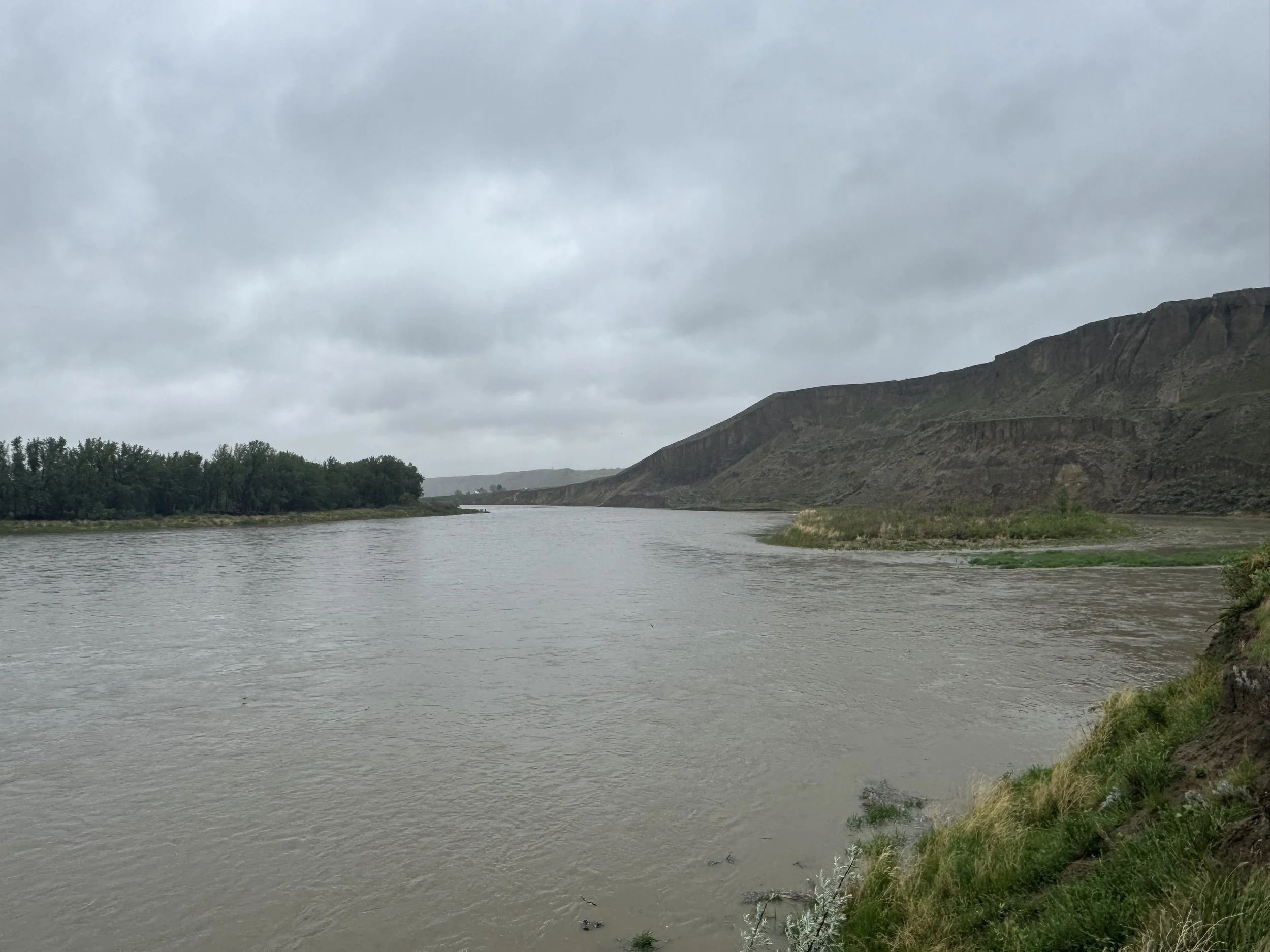
The confluence of the South Saskatchewan River, Ross and Seven Persons creeks on Sunday evening. (Photo Alex McCuaig)
Reservoir storage levels across southern Alberta are healthy with some - but not a lot - of room for flood control if required.
Anyone near rivers or creeks across southern Alberta should exercise caution as current conditions can make banks and coulees unstable.
The Medicine Hat Owl will be providing regular updates as conditions continue this week. Please feel free to submit photos from areas across southern Alberta to alexmccuaig@comtv.ca.