

What Medicine Hat can learn from other cities about water safety Communication
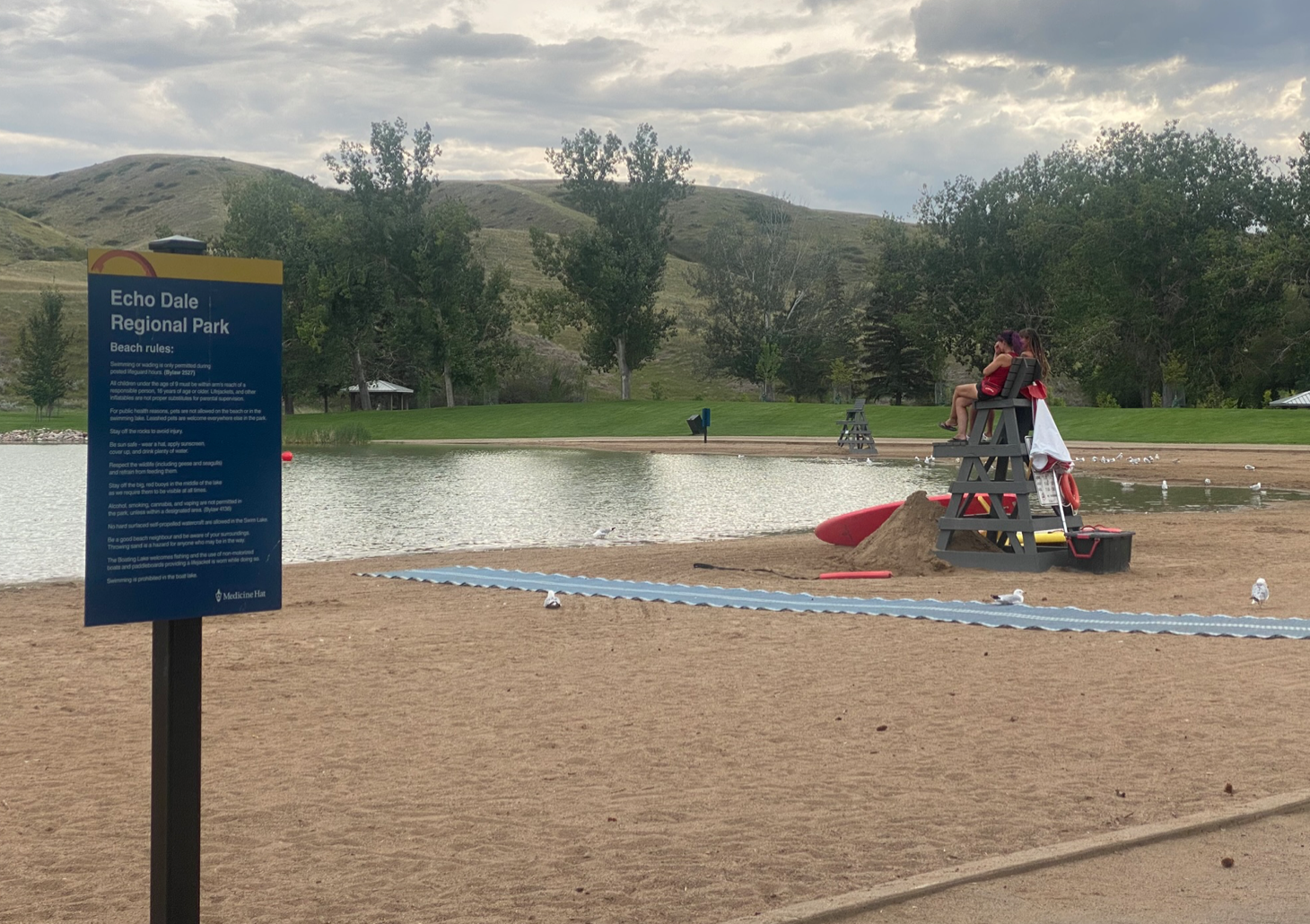
File photo - August 2025
The city has initiated an independent investigation led by the Lifesaving Society of Alberta and NWT in response to the tragedy at Echo Dale.
City of Medicine Hat announces start of independent investigation
Now that the weather is warming up, people are thinking of taking to the river. After years of incredibly low river levels on the South Saskatchewan River, they are now back up to normal. The danger has increased significantly. After peaking at 1,810 cubic metres per second on July 2, the river remains fast, powerful, and unpredictable. It measured at 471 m³/s as of 9:40 am today.
Boat launches are still closed, trails are barricaded. The river is receding, but it's still dangerous. With hot weather driving people to the water, the question becomes: what more could Medicine Hat be doing to keep people safe?
Other cities, large and small, have adopted practical measures that cost little but could save lives. Changing the culture around water safety is key.
The numbers tell the story
When a river runs this high, the danger isn't abstract. Medicine Hat Fire and Emergency Services deputy chief of operations Douglas Gill put it bluntly: "Fast-moving water, underwater currents, debris, and unstable riverbanks can increase the risk of injury or drowning. The safest choice is to stay out of the river until conditions have improved".
The City of Medicine Hat has closed all boat launches, including those at Strathcona Island Park, Echo Dale Regional Park, and Fire Station No. 1. Low-lying trails in Police Point Park, the Harlow and Riverside neighbourhoods, and sections of Echo Dale are also off-limits.
But as anyone who's watched people drag inflatable rafts down to the water under the Trans-Canada Bridge knows, closures alone don't stop everyone. And then there's the swimmer - usually young, often intoxicated, always convinced they can make it across. all too often it ends up in tragedy.
Saskatoon's flow-level warning system
Upstream on the same river, Saskatoon has developed a framework for communicating risk that Medicine Hat could adapt.
Saskatoon Search and Rescue has recommended a flow-level scale that translates cubic metres per second into plain-language risk:
Less than 250 m³/s: Suitable for novice paddlers
250-400 m³/s: Intermediate paddlers with moving-water experience
400-600 m³/s: Skilled paddlers with moving-water experience
600-800 m³/s: Expert paddlers only
More than 800 m³/s: Dangerous - stay away from the water
Medicine Hat has already seen flows well into the dangerous category this season. The river peaked at 1,700-1,850 m³/s on July 2 . Even after receding, conditions remain hazardous.
Saskatoon also publishes detailed incident reports online, posting the time, location, and actions taken for every water-related call. These reports are already created by the fire department - sharing them publicly would take only a few clicks.
"Too dangerous for rescuers"
Perhaps the most striking policy comes from Saskatoon's Fire Department. When river flows exceed certain thresholds, they tell the public they will not deploy rescue divers. It's not that they won't try to help - but they will not put their own people into water that is too dangerous even for trained professionals.
Their operational cutoff is 450 m³/s for diving operations. They will not deploy divers at higher flow rates.
That message is powerful. It tells the public: if you go in when the river is this high, you are truly on your own if you go under. They also tell you what to do when someone falls in.
Increased flows prompt safety warning for South Saskatchewan River | City of Saskatoon
High river flow precautions back in effect | City of Medicine Hat
Medicine Hat has not publicly published similar thresholds or instructions.
Wristbands, weak swimmers, and identification
At municipal pools in other cities, identifying weak swimmers is standard practice. Many facilities require children to pass a swim test before accessing deeper water, and colour-coded wristbands identify who can and cannot swim independently. A green wristband often means the swimmer passed the test; a yellow or orange band means they require closer supervision.
Echo Dale's swim lake presents a different challenge. It's free and open, with no gatekeeping mechanism. The water is murky - stirred up by sand and swimmers - making it nearly impossible for lifeguards to see beneath the surface. That's a problem.
A voluntary wristband program at Echo Dale could help. Parents could visit the lifeguard station to pick up wristbands for their weak-swimming children, giving lifeguards a clear visual cue about who needs extra watching.
According to city staff, free loaner lifejackets/PFDs are available at the First Aid station at the Echo Dale swim lake. It might be better to have them displayed more prominently, near the water.
Lifejackets as seatbelts
The Lifesaving Society, which works to prevent drowning across Canada, has been pushing for a cultural shift: making lifejacket use as routine as putting on a seatbelt.
"When we're choosing to recreate in the natural resources of our province, it's important to know things like what to do if you fall into the water, how to help yourself, and how to get to safety," says Amanda Beavers, Program Coordinator with the Lifesaving Society of BC .
In BC, the Lifesaving Society notes that most drownings happen from unexpected falls into the water - not from planned swimming. That means wearing a lifejacket while boating, fishing, or even playing on a dock is critical .
Lenea Grace, executive director of the Lifesaving Society's BC and Yukon branch, puts it this way: "You'd never get into your car without doing up your seat belts, so please make sure that you're zipping and clipping your life jacket on when you set foot on a boat" .
There's even a national "Wear Your Life Jacket at Work Day" that encourages everyone - from dock workers to outdoor professionals - to wear a lifejacket and share photos on social media . The goal: normalize lifejackets the way seatbelts have been normalized. It was on May 15 2026.
Signage, enforcement and communication
The City of Medicine Hat already has standards for regulatory signage, including warnings for drowning hazards, thin ice, and unmaintained trails. Riverside emergency location signs face toward the river for easy identification in an emergency .
But signage alone isn't enough. People need to know that the rules are being enforced. While police don't typically release names for bylaw infractions, periodic public updates from Municipal Enforcement - similar to traffic enforcement reports - could show the community that rules are being taken seriously.
A simple update like: "This weekend, Community Peace Officers issued X warnings and Y tickets for river-related infractions" would demonstrate enforcement without compromising privacy.
It would also be useful to report on each incident - "Yesterday, Community Peace Officers issued tickets to people floating on an inflatable raft for X violation, X number of children were onboard."
The City has posted communciation about water safety but it has been intermittent. This video is from about 3 years ago and is the only communication about National Drowning Prevention Week.
Changing the Culture Around Water Safety
The culture change starts with the children. As many parents know, when children get fire safety messages in school, they then come home and nag their parents to
Check their smoke detector
Check their carbon monoxide detectors
Create a fire escape plan
Now imagine those kids coming home with water safety in their heads and telling their parents
We cannot float on the river without lifejackets/PFDs on board, here's where we get can free ones to use
Uncle X has had alcohol, he cannot operate the vessel safely
Auntie Y cannot swim and needs to wear a lifejacket
You have to stay within arms reach of sibling Z when in the water
The City could start to observe Wear a Lifejacket to Work Day. This is observed every year before the Mayo Long, this year it was on May 15.
A path forward
Medicine Hat doesn't need a big budget to adopt these practices. What it needs is the will to be as clear, and as blunt, about the danger as other cities have been.
Publish a flow-level risk chart on the city website
Issue warnings that specify exactly when rescue operations become too dangerous for firefighters
Make the swim test and wristband system standard at city pools
Create a voluntary wristband program at Echo Dale
Put the loaner lifejackets/PFDs at Echo Dale closer to the water where they are visible
Post periodic enforcement updates to show the rules are being followed
Normalize lifejackets as "seatbelts for the water"
The fire department could talk about water safety when they go into schools to talk about fire safety.
Observe Wear a Lifejacket to Work Day
Observe National Drowning Prevention Week
The river is receding but the South Saskatchewan will rise again.
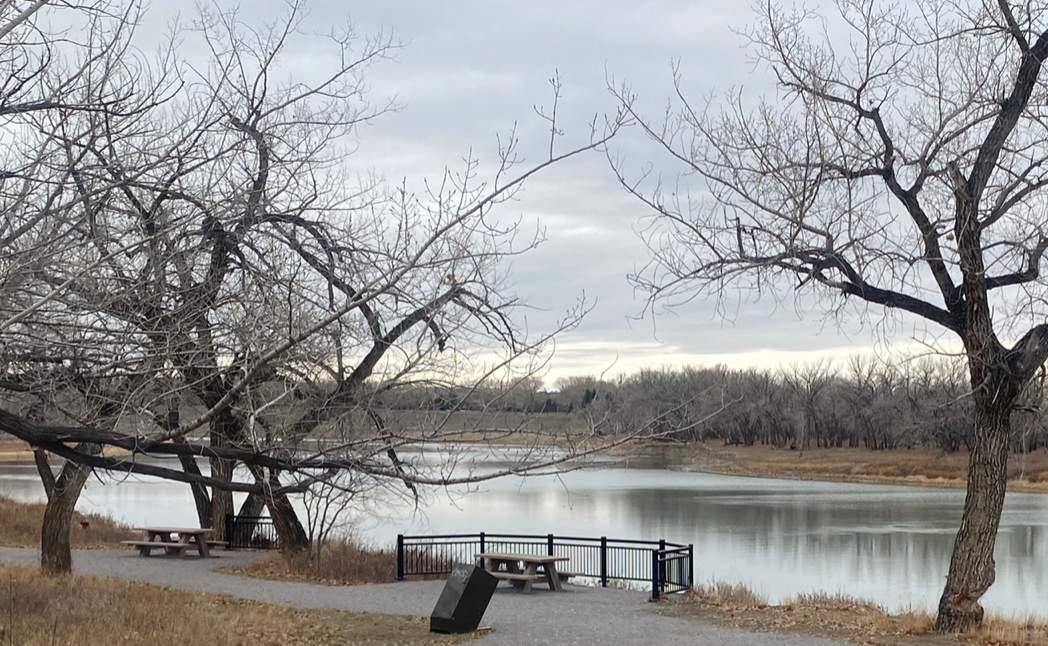
File Photo - Nov 2023
The Owl has learned that two picnic tables for the Alcohol in Public Parks pilot project are going to be beside the river in Strathcona Island Park.
While it is lovely to enjoy an adult beverage with a view of the water, it is best done from a controlled area such as a restaurant or a bar. Alcohol and water safety do not mix.
Owl News Water Safety Initiative
Owl News has created a Water Safety Inititiative. We are accepting donations to put lifejacket stations at local river access points, free to use at any time as well as donations to create water safety messaging.
You can reach us at
Our contact page https://owlnews.ca/contact
Call us at 1-888-600-7029
