Exclusive - PRC Accepts Complaint Against Chief Murphy and MHPS Officers
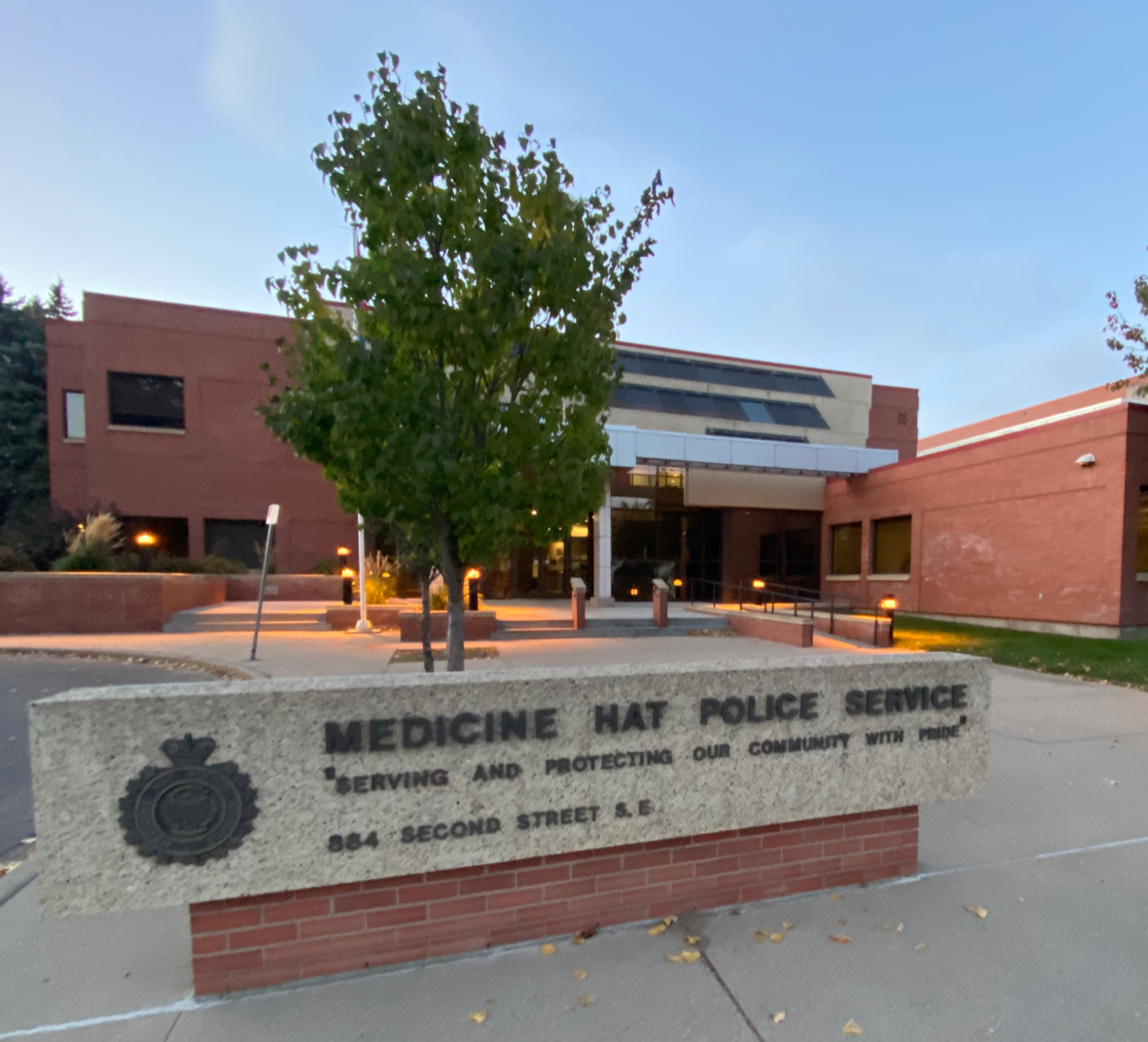
File photo - Owl News
Edit - one officer is no longer with MHPS so they have no jurisdiction over him.
After reviewing our complaints and the documentation provided by the Medicine Hat Police Service (MHPS) the The Police Review Commission (PRC) has accepted jurisdiction over complaints filed against Chief Alan Murphy and three Medicine Hat Police Service officers. The complaints stem from the October 8, 2024 incident at the police station.
The PRC has classified the matter as a Level 3 investigation, which means they are looking into allegations of non-criminal misconduct under the Police Conduct and Oversight Regulation. They now have 180 days to complete their investigation.
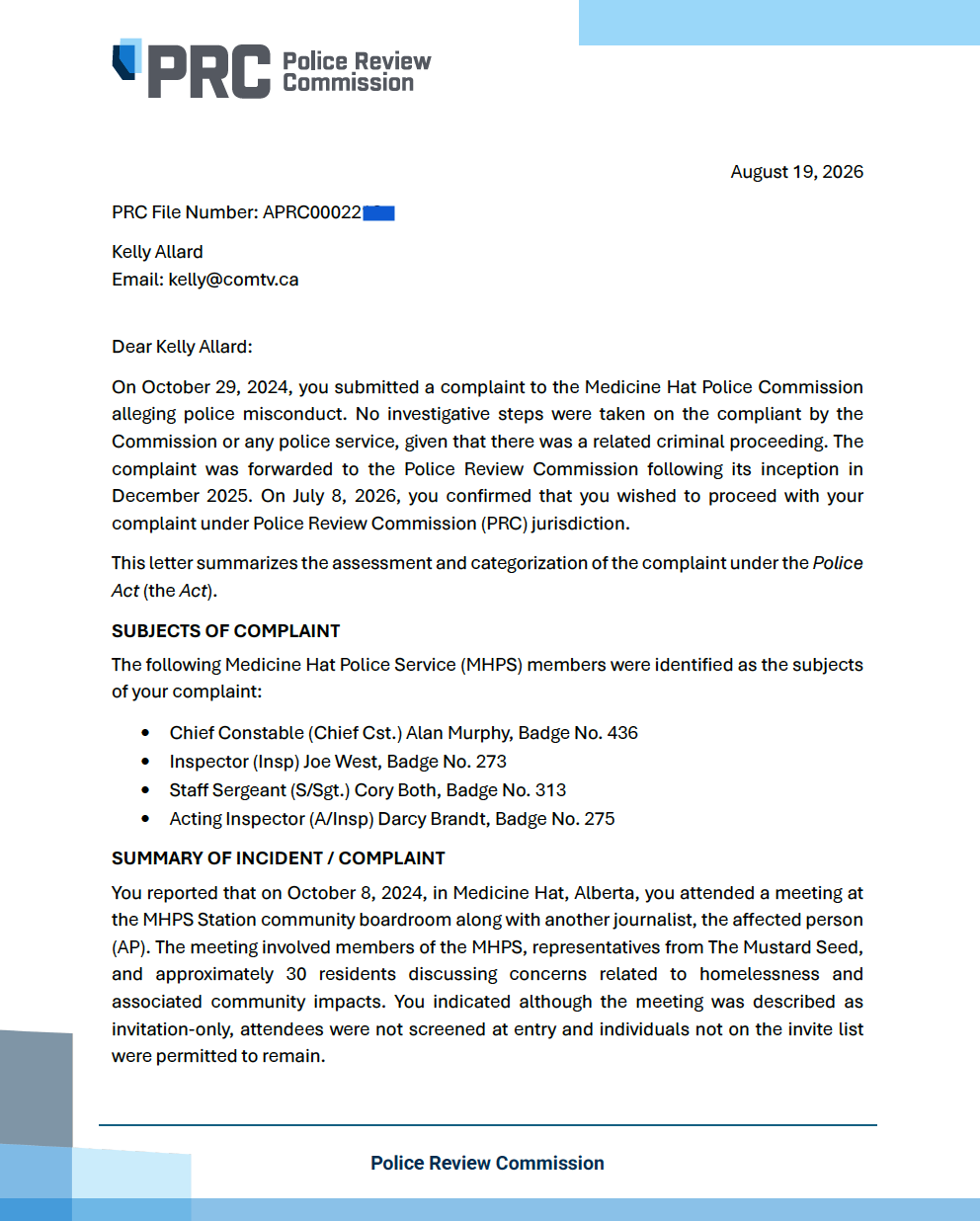
Below is the full text of the letter we received.
Letter Addressed August 19 2026 - letter at bottom of article
PRC File Number: APRC00022xx
Kelly Allard
Email: kelly@comtv.ca
Dear Kelly Allard:
On October 29, 2024, you submitted a complaint to the Medicine Hat Police Commission alleging police misconduct. No investigative steps were taken on the compliant (sic) by the Commission or any police service, given that there was a related criminal proceeding. The complaint was forwarded to the Police Review Commission following its inception in December 2025. On July 8, 2026, you confirmed that you wished to proceed with your complaint under Police Review Commission (PRC) jurisdiction.
This letter summarizes the assessment and categorization of the complaint under the Police Act (the Act).
SUBJECTS OF COMPLAINT
The following Medicine Hat Police Service (MHPS) members were identified as the subjects
of your complaint:
• Chief Constable (Chief Cst.) Alan Murphy, Badge No. 436
• Inspector (Insp) Joe West, Badge No. 273
• Staff Sergeant (S/Sgt.) Cory Both, Badge No. 313
• Acting Inspector (A/Insp) Darcy Brandt, Badge No. 275
SUMMARY OF INCIDENT / COMPLAINT
You reported that on October 8, 2024, in Medicine Hat, Alberta, you attended a meeting at the MHPS Station community boardroom along with another journalist, the affected person (AP). The meeting involved members of the MHPS, representatives from The Mustard Seed,and approximately 30 residents discussing concerns related to homelessness and associated community impacts. You indicated although the meeting was described as invitation-only, attendees were not screened at entry and individuals not on the invite list were permitted to remain.
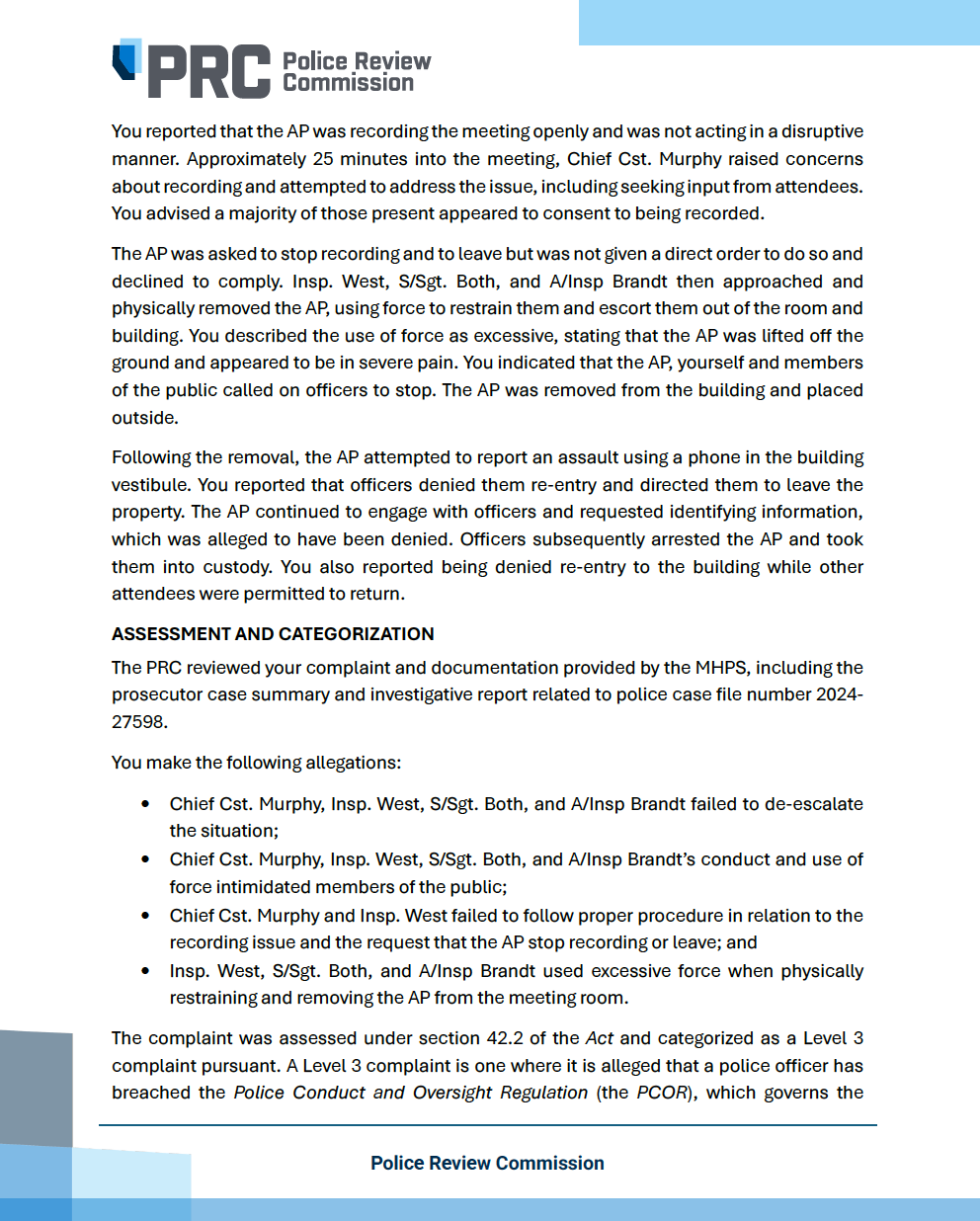
You reported that the AP was recording the meeting openly and was not acting in a disruptive manner. Approximately 25 minutes into the meeting, Chief Cst. Murphy raised concerns about recording and attempted to address the issue, including seeking input from attendees. You advised a majority of those present appeared to consent to being recorded.
The AP was asked to stop recording and to leave but was not given a direct order to do so and declined to comply. Insp. West, S/Sgt. Both, and A/Insp Brandt then approached and physically removed the AP, using force to restrain them and escort them out of the room and building. You described the use of force as excessive, stating that the AP was lifted off the ground and appeared to be in severe pain. You indicated that the AP, yourself and members of the public called on officers to stop. The AP was removed from the building and placed outside.
Following the removal, the AP attempted to report an assault using a phone in the building vestibule. You reported that officers denied them re-entry and directed them to leave the property. The AP continued to engage with officers and requested identifying information, which was alleged to have been denied. Officers subsequently arrested the AP and took them into custody. You also reported being denied re-entry to the building while other attendees were permitted to return.
ASSESSMENT AND CATEGORIZATION
The PRC reviewed your complaint and documentation provided by the MHPS, including the prosecutor case summary and investigative report related to police case file number 2024-27598.
You make the following allegations:
• Chief Cst. Murphy, Insp. West, S/Sgt. Both, and A/Insp Brandt failed to de-escalate the situation;
• Chief Cst. Murphy, Insp. West, S/Sgt. Both, and A/Insp Brandt’s conduct and use of force intimidated members of the public;
• Chief Cst. Murphy and Insp. West failed to follow proper procedure in relation to recording issue and the request that the AP stop recording or leave; and
• Insp. West, S/Sgt. Both, and A/Insp Brandt used excessive force when physically restraining and removing the AP from the meeting room.
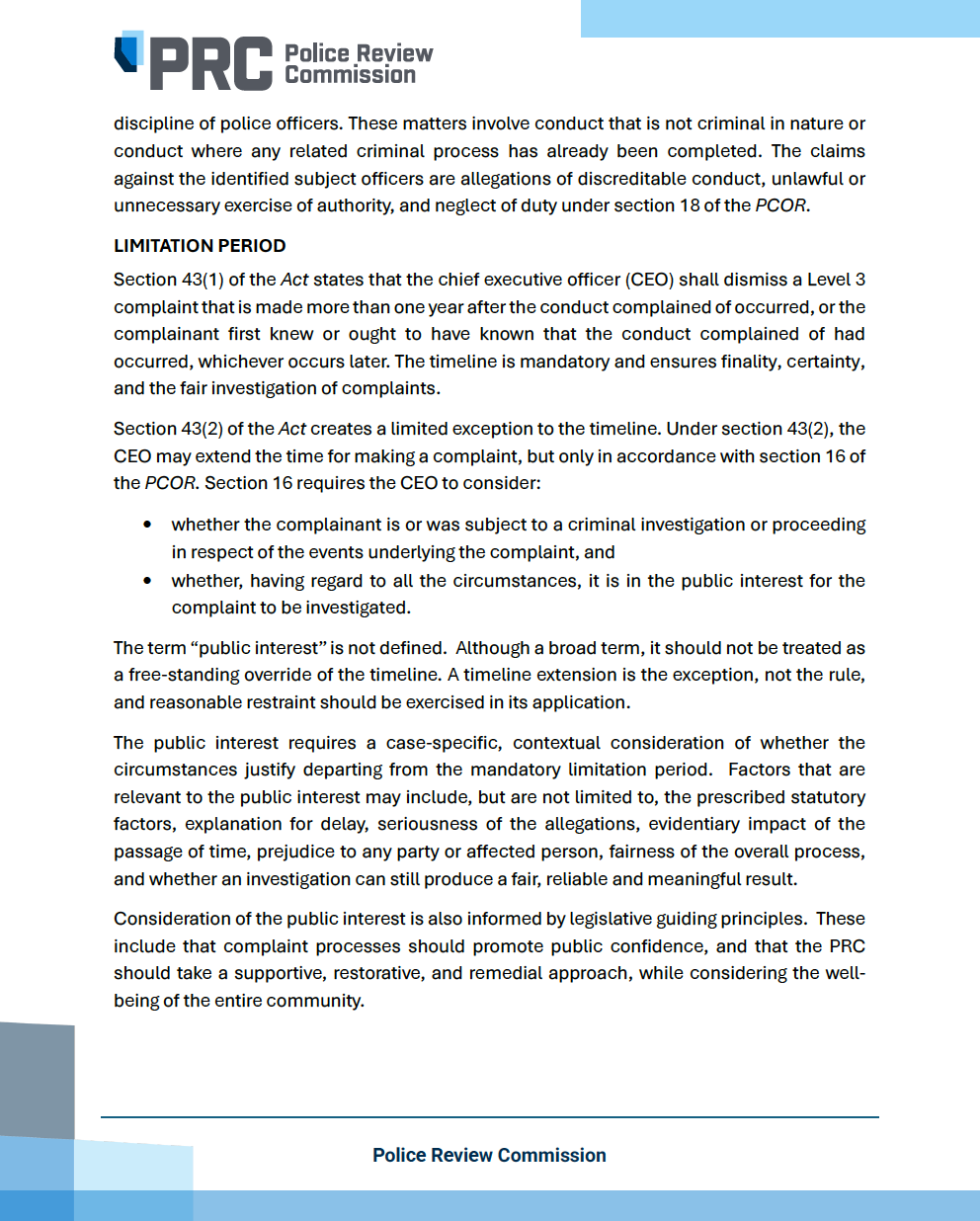
The complaint was assessed under section 42.2 of the Act and categorized as a Level 3 complaint pursuant. A Level 3 complaint is one where it is alleged that a police officer has breached the Police Conduct and Oversight Regulation (the PCOR), which governs the Police Review Commission discipline of police officers. These matters involve conduct that is not criminal in nature or conduct where any related criminal process has already been completed. The claims against the identified subject officers are allegations of discreditable conduct, unlawful or unnecessary exercise of authority, and neglect of duty under section 18 of the PCOR.
LIMITATION PERIOD
Section 43(1) of the Act states that the chief executive officer (CEO) shall dismiss a Level 3 complaint that is made more than one year after the conduct complained of occurred, or the complainant first knew or ought to have known that the conduct complained of had occurred, whichever occurs later. The timeline is mandatory and ensures finality, certainty, and the fair investigation of complaints.
Section 43(2) of the Act creates a limited exception to the timeline. Under section 43(2), the CEO may extend the time for making a complaint, but only in accordance with section 16 of the PCOR. Section 16 requires the CEO to consider:
• whether the complainant is or was subject to a criminal investigation or proceeding in respect of the events underlying the complaint, and
• whether, having regard to all the circumstances, it is in the public interest for the complaint to be investigated.
The term “public interest” is not defined. Although a broad term, it should not be treated as a free-standing override of the timeline. A timeline extension is the exception, not the rule, and reasonable restraint should be exercised in its application.
The public interest requires a case-specific, contextual consideration of whether the circumstances justify departing from the mandatory limitation period. Factors that are relevant to the public interest may include, but are not limited to, the prescribed factors, explanation for delay, seriousness of the allegations, evidentiary impact of the passage of time, prejudice to any party or affected person, fairness of the overall process, and whether an investigation can still produce a fair, reliable and meaningful result. Consideration of the public interest is also informed by legislative guiding principles. These include that complaint processes should promote public confidence, and that the PRC should take a supportive, restorative, and remedial approach, while considering the well-being of the entire community.
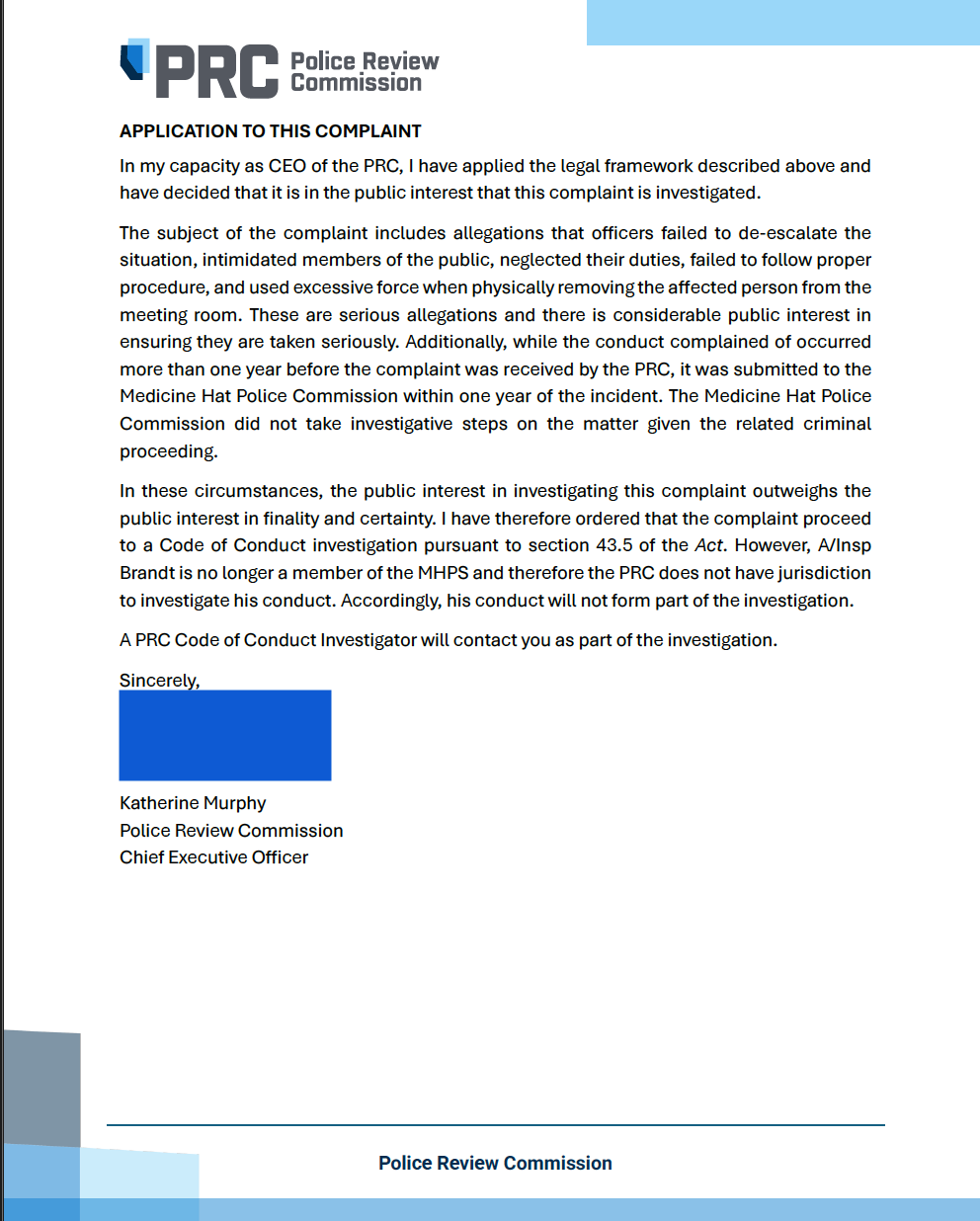
APPLICATION TO THIS COMPLAINT
In my capacity as CEO of the PRC, I have applied the legal framework described above and have decided that it is in the public interest that this complaint is investigated. The subject of the complaint includes allegations that officers failed to de-escalate the situation, intimidated members of the public, neglected their duties, failed to follow proper procedure, and used excessive force when physically removing the affected person from the meeting room. These are serious allegations and there is considerable public interest in ensuring they are taken seriously. Additionally, while the conduct complained of occurred more than one year before the complaint was received by the PRC, it was submitted to the Medicine Hat Police Commission within one year of the incident. The Medicine Hat Police Commission did not take investigative steps on the matter given the related criminal proceeding.
In these circumstances, the public interest in investigating this complaint outweighs the public interest in finality and certainty. I have therefore ordered that the complaint proceed to a Code of Conduct investigation pursuant to section 43.5 of the Act. However, A/Insp Brandt is no longer a member of the MHPS and therefore the PRC does not have jurisdiction to investigate his conduct. Accordingly, his conduct will not form part of the investigation.
A PRC Code of Conduct Investigator will contact you as part of the investigation.