

City Committee Says No City Exempts Chalk - Edmonton Does
Medicine Hat's Governance Committee met on September 15 and decided not to change the graffiti bylaw. Staff said no other city distinguishes between permanent and temporary media. The Owl discovered otherwise.
What the Committee Discussed
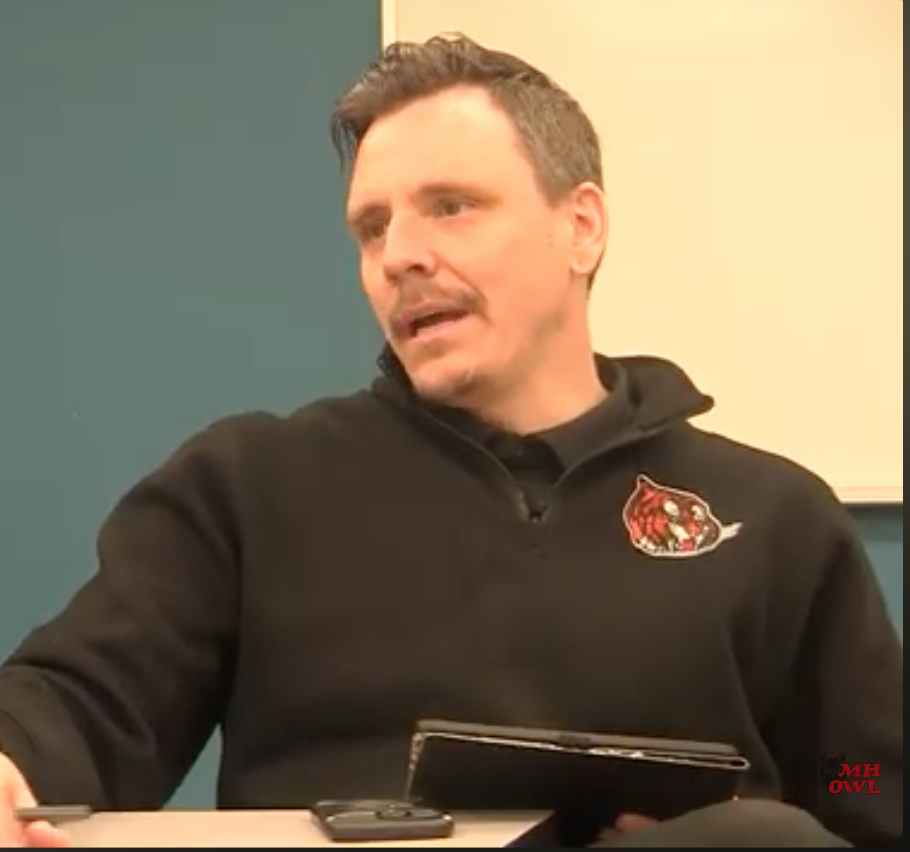
Councillor Stuart young - File Photo Owl News
The graffiti bylaw was added to the agenda at the call of the chair by Councillor Stu Young.They talked about fines, fairness, and whether the bylaw itself makes sense.
Young asked whether the bylaw should differentiate between permanent and non permanent media (if chalk should be treated the same as spray paint).
City Solicitor Ben Bullock told the committee that they could not find a single municipality that makes that distinction.
Calgary, Edmonton, Lethbridge, and Grande Prairie were listed as cities that do not differentiate. There was a discussion about the fact that police have discretion whether to issue the ticket or not.
Mayor Clark raised the issue of kids using sidewalk chalk, she also raised the issue of allowing chalking as long as it was not lewd or offensive.
Chair Young asked what would happen if his seven year old chalked on the sidewalk. Staff explained that no one under 12 can be charged with an offence. When it came to adults chalking on a sidewalk there was no clear answer.
The committee also discussed lower fines for first offences and higher fines for repeat offences. Mayor Clark asked whether fines actually deter people. The fact that the city hosts a graffiti festival called Mural Fest was also raised. Clark noted that there is no way to measure deterrence, and pointed out that for a person with no money, a $500 fine is significant.
The recommendation at the end of the meeting was to make no changes at this time.
Here’s What the Edmonton Bylaw Says
Section 62 of Edmonton's Public Spaces Bylaw 20700 defines a "marking" as any mark made using ink, pigment, dye, stencils, paint, etching, burning, or any other means. Then it adds four words.
"but does not include sidewalk chalk."
Page 33 of the first draft of Edmonton's bylaw in 2024 included a $250 fine for "using sidewalk chalk on a public sidewalk." Community groups including Paths for People pushed back, arguing that it did not make sense to fine chalk the same way as spray paint.
Edmonton City Council sent the bylaw back for redrafting. The new version specifically exempted sidewalk chalk (page 22).
Calgary Had a Similar Situation - and Dropped It
In 2015, CBC Calgary used chalk to write #WhyWhyC on city sidewalks as a publicity stunt for their newscast. The chalk was made of chalk, water, and corn starch, which meant it would wash away.
Calgary bylaw services investigated and called it graffiti. A bylaw inspector said those responsible could face a $5,000 fine, and the broadcaster apologized and cleaned it up. Bylaw services then dropped the case and tweeted "We'll chalk this up as a mistake." There was no fine, no charge, and no trial.
Ottawa Backed Down Too
In 2020 Ottawa police detained people three separate times for writing messages in chalk on public sidewalks.
June 2020 woman was detained for writing "Black Lives Matter" in chalk. Police threatened to charge her with mischief because she did not have permission.
The very next day, Ottawa's mayor Jim Watson tweeted that his permission was not needed to chalk on the sidewalk.
July 2020, an Ottawa University professor wrote "Abolish Prisons" in chalk outside the Ottawa police station. He was confronted and detained by police.
September 202 , police again detained two women who were writing messages like "Racism hurts everyone" and "End Police Brutality" on a public sidewalk. Three police officers showed up for that one.
After that September incident, Mayor Watson tweeted again. He said: "This is not vandalism. It's chalk on a sidewalk! As long as it's not promoting hatred (this was the exact opposite) and if you don't like it, just wait for a rainy day."
The Scan Was Not Thorough
There was no paperwork in the governance committee agenda packet. There was no scan summary, no comparison table, and no bylaw excerpts. Young told Owl News in July that he believed a jurisdictional scan was done but that he did not recall the outcome. The City has admitted doing at least one faulty jurisdictional scan just over a year ago.
Chalk Trail Decision Due October 23 - Your Tax Dollars at Work
The City of Medicine Hat is prosecuting Geraldine Stuber, the main force behind the Niistiapi Kookums. The Kookums feed and care for the street people every day, they organize blanket, clothing and hygiene item drives.
Stuber is well known in the community and holds an awareness event about homelessness every November.
On November 10 2025 she chalked messages of hope, love, and peace on the and the steps clock tower at city hall, and was given a ticket - the MHPS saw fit to send no less than four police officer to issue the ticket.
Stuber thought the ticket was ridiculous, so she did it again to make a point and was given another ticket.
She was never asked to clean up the chalk, and she says she would have done it if given the opportunity.
Stuber went to trial. August 17 2026; Commissioner D. Price will hand down his ruling on October 23, 2026.
That will be 347 days and multiple court appearances after the tickets were issued.
It's very likely that the City has spent far more than $5000 prosecuting these tickets.
What Happens Next
Commissioner Price can do several things - he can find her not guilty and dismiss the tickets, convict her but impose a reduced fine, grant an absolute discharge with no penalty, or suspend the sentence entirely. The Ottawa case was entered into evidence, which suggests the commissioner is weighing how other jurisdictions have handled similar chalk-related matters.
Previous Articles
August 10 2026 Grafitti Bylaw Finally Back on the Agenda as Chalk Trials Loom
August 19 2026 Chalk, Cops, And City Hall: A Costly Council Committee Circus
