

Code Orange: the Drug User You Didn't Notice
Why I'm Writing This
For years, I only told this story to people one at a time. Then this past International Overdose Awareness Day, I told it to a public audience, for the first time. A number of people came up to me afterward and said I should share it with everybody. So here it is.
Trigger Warning: This piece mentions chronic pain, long-term opioid use, overdose, drug poisoning, near-death experiences, medical stigma, and suicide. There is some foul language.
Outdated Barriers To Housing
Many people think in order to get housing, people should be abstinent. No drugs - this includes alcohol (alcohol is a drug).
It’s not about the drugs; it’s about the pain.
Whether it is physical pain or psychological pain, the result is still the same.
You cannot expect anybody to reduce or stop their substance use until their pain is addressed.
My story
1998 I was married with four children at home ranging in ages from 6 to 13. My husband Carl worked out of town most of the time either long-haul trucking or running heavy equipment in the oil patch.
The burden of day-to-day life was on my shoulders. I was the one responsible for running the household, paying the bills, making sure all of the kids were cared for, that they were doing their homework, that they were going to school, that Carl had groceries, etc.
At the time I had two part-time jobs and my own gardening business. My gardening business was just starting to take off and I had multiple repeat customers every month. My youngest was finally old enough to go to school full-time and I was looking forward to this new chapter in my life where I could contribute more financially to the household.
Life as I knew It Changed
Late in the year I got a massive sinus infection, which affected my balance. My doctor sent me to Lethbridge for an electronystagmography (ENG). It measures eye movements in response to having water poured in the ear. To do this test, they have to clean out your earwax. The technician used a big cotton swab to remove it.
Pain, unlike anything I’d ever had before, started a few days later.
My doctor said my ear canal was almost completely closed. The technician had scratched the inside of my ear and given me a staph infection. My doc gave me T-3s and a heavy-duty antibiotic: Cipro.
The pain went away.
It returned two weeks later.
I was afraid the infection was back so I saw my doctor again.
My ear was fine.
The loss of balance persisted. Both of my part-time jobs required me to be able to stand, so I had to quit them. It was winter, so no gardening customers.
That was the beginning of the year of hell.
The Year of Hell
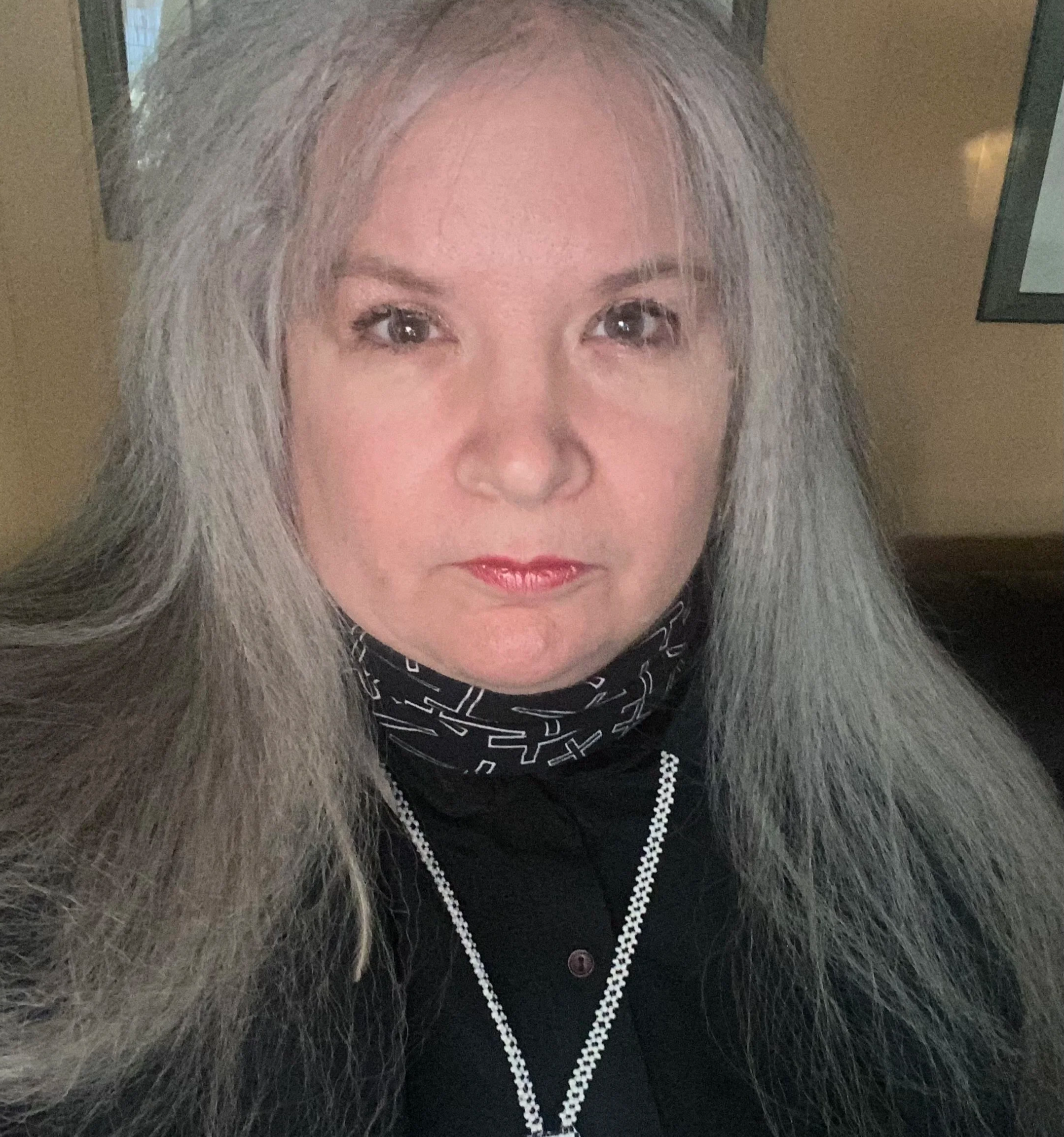
Author 2025 - I did not look nearly this calm in 1999.
The pain returned
again and
again and
again.
Imagine having a really bad headache, earache, and a toothache all at the same time. That gives you an idea of how much it hurt. It was typically on 1/2 of my face, sometimes it went over to the other side.
When the pain was bad
A puff of air on my cheek hurt
My hair hurt
I could not eat
I could not sleep
I could not think
I could not function
Regular OTC painkillers wouldn’t touch it. I had all kinds of scans done. In addition to the ENG, I had
an EEG
two CT scans
an MRI
an MRA
a bone scan
I had to reduce my gardening business to one customer. I used to be able to do physically demanding labour for ten hours a day, now two hours was pushing it. Worse, it meant all work - whether it was gardening, housework, or just daily chores like cooking; two hours was my limit.
That summer, my mom took all four kids for three weeks back to BC. I had hoped to spend quality time with Carl, taking groceries to him out of town but instead I spent those three weeks on the couch with an ice pack on my face, howling in pain.
Because they could not find a reason for the pain, they assumed it was nerve pain. I was diagnosed with trigeminal neuralgia (TN). Everyone has two trigeminal nerves, one on each side of the face. The trigeminal nerve is the largest of the cranial nerves.
The pain would ramp up to a 9/10.
I wondered
Is this pain ever going to go away?
Am I going to stuck being in this much pain for the rest of my life?
I tried to do what I could. My children watched the tears streaming down my face while I cooked supper; they felt helpless. Nobody could help.
Yes, they did chores but there were certain things that were beyond them - driving, grocery shopping, paying bills, cooking the main meal, etc.
I cried every single day because of the pain, and avoided going out in public unless I absolutely had to. It made people uncomfortable when I cried in front of them especially when they could do nothing to help.
I was put on a medication commonly used for TN called Tegretol. The doctor started me off with a low dose and gradually increased it. This is a drug that can trash your liver, so I also had to get bloodwork to make sure my liver was not going to die.
The Medication Didn't Work
After being on the meds for a while, it became obvious that they were not working. I was in so much pain that I did not eat or sleep for three days.
I fainted three times within 10 minutes.
The last time was when I was sitting on the toilet. Carl was actually at home and heard the big thud as I fell. Thankfully, I didn’t lock the bathroom door because it was an old house; it’s not a door where you can unlock it from the outside.
Carl and the kids were terrified.
The description Carl gave our doctor made her think I might have been post-ictal and she ordered a sleep-deprived EEG. The sleep-deprived EEG was negative.
(I did have childhood epilepsy which I outgrew so it was a reasonable test.)
My Privilege Saved Me
Here’s where the story gets interesting. I’d had all the scans, they still could not find a reason for my pain and
my doctor believed me anyway
If I would’ve been someone who abused alcohol or smoked pot - which was illegal back then - or did any kind of illegal drugs, they would’ve said I was drug seeking.
The colour of my skin and my lifestyle were my privilege.
I went through all of the pain meds.
T3s
Tramacet
Dilaudid
Percocet
It took about a year before I finally got something that worked for more than a couple of weeks.
I was hesitant to move to morphine.
I worried about
becoming an addict
getting stoned/high
the stigma
people breaking in and stealing my medication
I Finally Got Relief
I started off with liquid morphine (Statex), 1 mg/ml; the starting dose was 2 mg every 4 hrs.
The morphine did not get me high - I felt normal, just without the pain. I could finally eat and sleep again. All of a sudden, I could function. I could be a better mom to my kids, I could be a better person.
My doctor was fantastic and allowed me to increase my dosage as I saw fit. I just told her afterwards and she adjusted my prescription, never making me wait until a certain date to get a refill.
By doing this, she decreased my anxiety which in turn reduced my pain.
When I reached 60 mg of liquid morphine a day, my doctor said it was time to start taking the long-lasting morphine. I was worried about becoming an addict and she said
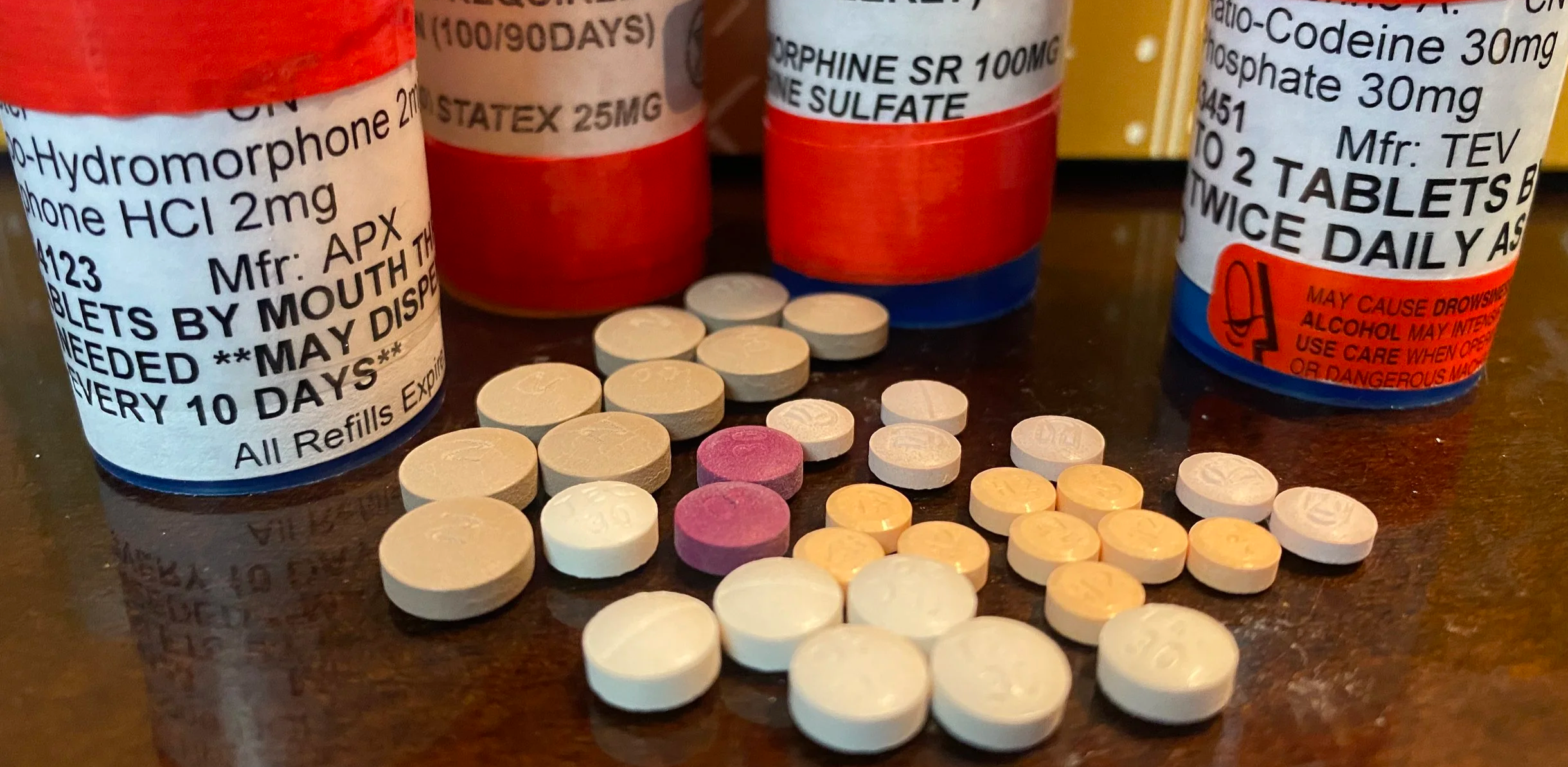
Various opioids - file photo Owl News
An addict is someone who would lie, cheat and steal to get the drugs. You’re not an addict. Yes your body is dependent on it and if you stop quickly, yes you will go through withdrawal but you are not an addict.
I started off on the lowest dose of extended release morphine, 15 mg.
Two pills, twice daily; a dose of 30 mg/day.
This was half of what I was taking in liquid form. It controlled my pain so well that I actually went through withdrawal. I had to wean myself down from 60mg to 30mg with the liquid morphine.
I still kept the liquid morphine for breakthrough pain.
I was ultimately diagnosed with Atypical Facial Pain aka Persistent Idiopathic Facial Pain. No cause, no cure.
The Next 20 or So Years
Over the years the pain increased (or maybe my body adjusted to the medication); at one point I was taking 240 mg per day.
(At the time there was no recommended maximum dosage. The current recommended maximum dosage is 90 mg/day of morphine/morphine equivalent. This came after there was a huge outcry of doctors over-prescribing pain medications such as OxyContin.)
Carl had been taking OxyContin for his chronic pain. He had a below-the-knee (BTK) amputation of his left leg and end-stage arthritis in his right ankle from a severe ankle break 20 years before; he could feel one of the three screws near the surface.
Carl switched to morphine.
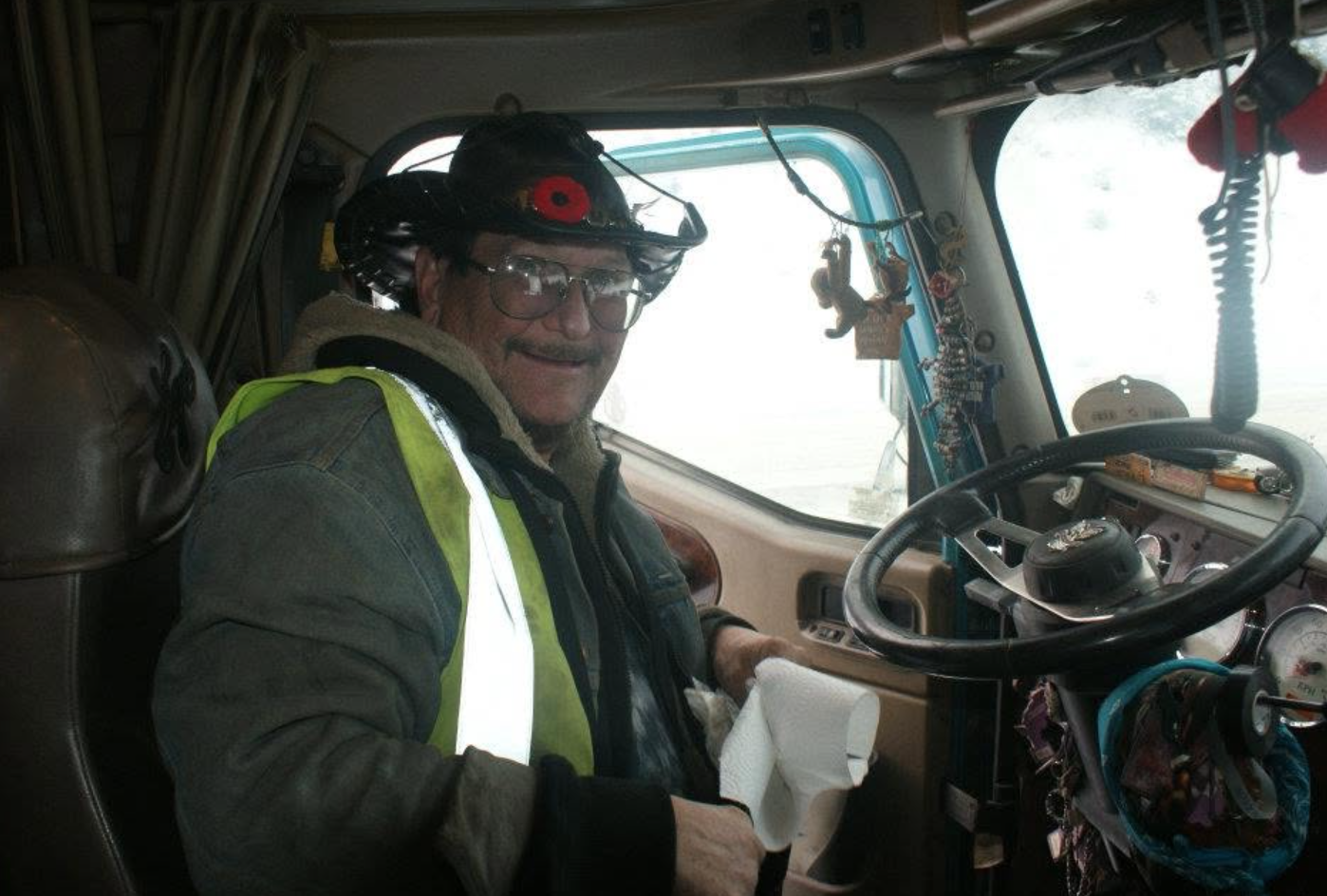
Author’s husband Carl Allard - Somewhere on the road 2012
He was also allowed to increase his dosage as he saw fit.
His trucking job required random drug testing.
Every time the morphine would show up in the results.
Every time they would talk to his doctor and his pharmacist.
Every time he was cleared to operate a vehicle hauling up to 140,000 lbs on our nation's highways.
At one point he was taking 2000 mg of morphine/day.
No, that is NOT a typo.
They still cleared him.
The Stigma
2006 Carl got a virus that attacked his heart and put him into congestive heart failure (CHF). At the ER, the first nurse saw his jailhouse tattoos and made an assumption.
The nurse asked Carl in a snotty way -
What kind of illegal drugs have you taken?
I could see their attitude was -
He’s just lowlife biker trash, we can see he’s done jail time, he must be an illegal drug user and so we don’t really have to give a shit about him and can treat him like garbage.
Carl said
None.
Their shitty attitude changed immediately and they acted with more compassion.
Carl spent nine days in hospital. He was unconscious for the first three and did not even know I was there.
(Because the CHF was caused from a virus and not something like a chronic heart condition, he was able to go back driving heavy trucks.)
2014 Carl had reconstructive surgery on his right ankle. It reduced the pain so much that he went from 2000 mg/day to 600 mg/day overnight. He had to wean himself down because he was experiencing withdrawal.
2016 Carl was admitted to hospital in septic shock - he tested positive for Influenza A and Strep Pneumonia. His kidneys and lungs had shut down, he was not expected to live. The mortality rate for someone with Carls medical history at this point was 80-85%; his chances of survival or even keeping all of his body parts were dismal.
I told an ICU doctor how much morphine he was on. The doctor said that he was amazed that my husband was still conscious after taking that much every day.
(I didn’t have the heart to tell him Carl used to take more than 3 times as much.)
There’s your stigma again.
I suggested that they titrate him down from the 600 mg/day. They put him on a fentanyl patch - they only had to apply it every 3 days. When he was taken off the ventilator 30 days later, he was down to the lowest dose fentanyl patch they made. Getting him off the patch wasn’t deemed important at that time; he had to learn to walk, talk and eat again.
A Near Death Experience - twice
2017 Carl had been home for a few months, he was even back on two wheels. One afternoon we were napping - he in his recliner in the living room, me in the bedroom. I came out to find him unresponsive and making some weird breath sounds. My first thought was he had had a stroke - a drug overdose/poisoning was not on my mind.
I didn't recognize it for what it was (remember, he had a lot of medical issues).
I was worried:
that the anticoagulants he was on weren’t working (stroke, heart attack or PE)
that maybe the anticoagulants were working too well and his INR was too high
I pounded on his chest trying to wake him up then called 911 and followed their instructions. I dragged Carl to the floor and did CPR. I was scared as hell - this was a 200 lb man but somehow I was able to get him on the floor.
The ambulance arrived - the paramedics said that Carl was lucky I was there; he was that close to death. (Carl heard about me pounding on his chest and said with more than a hint of admiration - So that’s why my chest hurts so much. )
They said it looked like a drug overdose, which didn’t make any sense to me because we were using the patch properly. He did have some liquid morphine for breakthrough pain, but he hadn’t used that. We removed the patch and they took him to the hospital; we got home about midnight.
9:30 the next morning I was vacuuming and wondering why he wasn't awake. I went into the bedroom and again he was unresponsive; his blood pressure was 60/40.
Again, I called 911.
Again, I pulled him onto the floor, over the footboard of the bed.
This time they gave him naloxone right away. He woke up instantaneously, looked at the four paramedics standing around him and said, "What are you guys doing here?"
Remember, we’d taken the patch off the night before and he had not taken any more medication in the meantime.
This was the same drug poisoning more than 12 hours later.
The paramedics both times were fantastic -
no judgement, no contempt, only compassion.
This time Carl was admitted to hospital and put on a Narcan drip. He was starting to feel withdrawal symptoms and asked for something for his nausea. The nurse said
"The doctor hasn’t ordered anything for your nausea…but we can put the patch back on."
I got a little testy and I told the nurse:
"You call that doctor right now and you get something ordered for his nausea."
Carl was willing to have that patch put back on, the same patch that fucking near killed him. He got meds for the withdrawal and an appointment with the pain clinic, which was a year in the future.
More Stigma
After a hospital visit, standard procedure requires a follow up with your family doctor. Ours happened to be away, but she had a replacement to cover her practice. We walked into the office and the locum doctor asked Carl why he was there. Carl used humour to deal with difficult situations.
He said, in a joking manner
"I almost overdosed… twice."
I will never forget what the doctor said.
"Were you trying to get it right?"
We were appalled. It didn’t even occur to us that someone would say something so awful, especially a medical professional.
We were already traumatized - him for being so close to death, me from having to do CPR on him - twice. I manhandled my husband to the ground to save his life -twice - and then we had to deal with this fucking doctor with her shitty fucking attitude?
Our doctor was absolutely furious when she heard and vowed never to hire that doctor again.
The Aftermath
Carl was able to manage his pain with OTC medications (until he got cancer again but that is a story for another day). He had been seeing a counsellor since the year before, which helped him with anxiety and managing his pain. The next year he kept the pain clinic appointment but only to tell them the story of how he damn near died from the fentanyl patch so they could learn from it.
The Weaning
I had been seeing a Behavioural Health consultant since 2016, she helped me manage my stress and learn how to set set healthy boundaries (NO is a complete sentence) which ultimately decreased my pain. By the early 2020s, I was able to manage my pain so well I was down to 30mg/day of morphine with no breakthrough pain. I was tired of taking pills twice a day and decided to wean myself off. I told my doc and my pharmacist; I made a plan for weaning and gave them each a copy.
The first time did not work.
I had started with replacing the 30 mg/day of pills with 60 mg /day of the liquid. I had forgotten the liquid worked differently than the pills.
A few weeks after my first trial, I remembered how when I went from 60mg/day of the liquid to 30mg/day of the pills that I had a lot of nausea.
I altered my plan and again gave a copy to my doctor and my pharmacist.
The second time I tried, I started off with 60 mg of the liquid per day and weaned myself off effortlessly.
Don't Praise Me
People praise me for getting off the meds but it was easy for ME.
It was easy for me because I had the proper medical care to start with, I never had to turn to street drugs.
It was easy for me because my doctor had no idea
how much alcohol I drank as a teen (I could drink a dozen beers in a night and wake up wanting another beer).
how much weed and acid I did as a teen (I did shrooms a few times and realized I liked them too much so I quit)
It was easy for me because I had not used recently any illegal drugs (pot was illegal at the time).
It was easy for me because I had a doctor who believed me and ordered the tests.
It was easy for me because I had a doctor who believed me and gave me the meds I needed even when all of the tests were negative.
It was easy for me because I had access to a safe supply
I had a much harder time getting off of cigarettes and staying off - the cravings for cigarettes can be overwhelming. I had no cravings for morphine.
Don't praise me
Praise the people who do not have my privilege, the people who were failed by the health care system, the people who struggle each and every day trying to survive.
But For The Grace of a Safe Supply…
I look at the people struggling with substance use and think to myself
But For The Grace of a Safe Supply, There Go I
If I did not have
A white skin
A history that did not show any illegal drug use
A history that did not show a substance use issue with alcohol
A doctor who believed me and ordered the tests
A doctor who believed me after the negative test results and gave me meds anyway
I would have died by suicide or I would have started using street drugs.
I once told a retired RN that I was no different than the people who use street drugs.
That nurse got very offended and said
Of course you are different, your pain is legitimate.
I said
Their pain is legitimate too, they just didn’t have a doctor who believed them like I did.
They didn’t have a white skin and the privilege that I have.
The Stigma
Even when I was taking the prescribed morphine there was stigma. I hesitated to tell friends and family becasue I knew they would be judging me. I knew there was judgement in the medical profession as well.
My dad told me that the morphine would shorten my life. I told him that I would have already been dead if I did not have it. Extended family members judged me for it, saying I was popping pills all day long. Yes, yes I was technically popping pills all day long (twice a day) so I could function instead of the alternative.
Now imagine the stigma that people without my privilege face each and every day.
They are harshly judged by people who think that the only answer is abstinence, they are assaulted by the public because they are existing in public, social media posts saying they should all just be allowed to die or take them out of town and leave them there, they are treated poorly by those who took an oath to Do No Harm.
Why would anybody agree to go to treatment or see a doctor when the stigma is so blatant and you get treated as a piece of shit they scrape off their shoe?
Why should they trust anybody?
Housing First - Abstinence Later (Or Not at All)
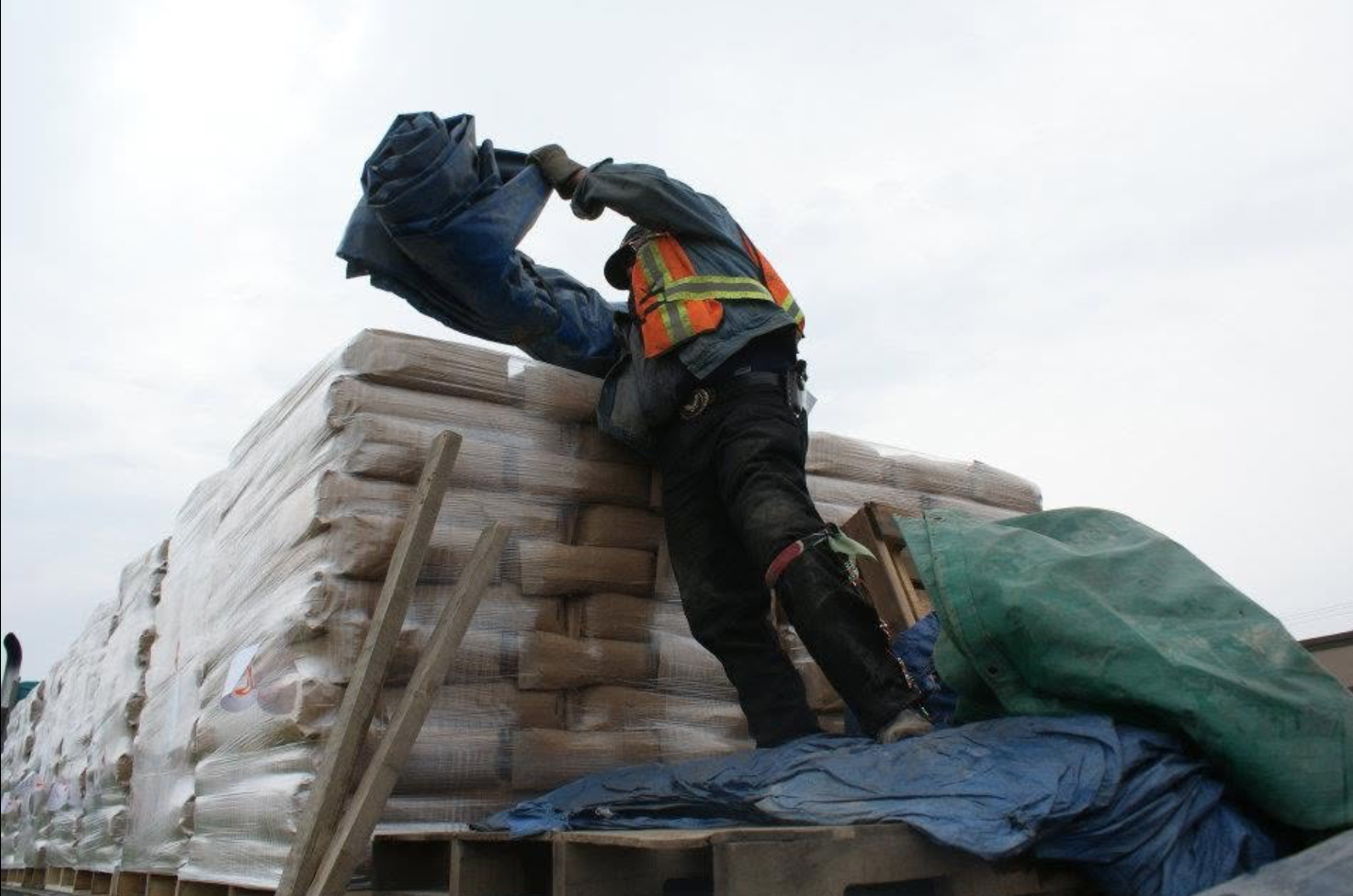
Carl Allard Nov 2011 - 2000 mg of morphine/day allowed him to do his job. That bandana tied on his leg was to help hold his artificial leg in place. Photo by Author
Many people think that in order to get housing, people should be abstinent. No drugs — including alcohol.
But it's not about the drugs. It's about the pain.
You cannot treat pain without a safe place to live, a doctor who believes you, a health care system that treats you with respect,and a supply that won't kill you.
I had all four. That is the only reason I am still here to write this.
Abstinence is not the only answer. If people can get a safe supply that won't kill them, then they can function.
Society turns a blind eye to functional alcohol and drug users every single day. As long as someone already has a home, nobody calls them out on their drug use.
Housing first. Then healing. Then everything else.
I challenge anybody to try to pinpoint when I stopped taking the morphine. They cannot because my behaviour never changed. The therapeutic narcotics allowed me to function, they did not cause dysfunction.
It would be easy to pinpoint when I started because I stopped howling.
