

The Seconder Rule: What Councillors Say vs. What the Law Requires
Two Medicine Hat city councillors have said that councillors should get a seconder for a motion before bringing it to a council meeting. But the Municipal Government Act and the official handbook for councillors say something different. This difference matters because Medicine Hat residents already have a low tolerance for decisions made behind closed doors.
What Councillors Hellman and Young Said
Councillor Chris Hellman has said he spent 20 years on boards. He supports the idea that a motion should have a seconder before it gets to the council table, which is also called the horseshoe. Councillor Stuart Young also said a councillor should talk to colleagues first and find someone to second a motion before it comes to the table.
What the Law Says
The Municipal Government Act says council meetings must be open to the public. The purpose of open meetings is to promote public involvement and accountability.
The act also lists the duties of councillors.
Councillors must
participate in council meetings
consider the welfare and interests of the whole municipality
participate in developing and evaluating policies and programs.
The act does not say that councillors must get a seconder before a meeting.
The act does not say that councillors should make decisions before a meeting.
The act requires that decisions be made in public meetings.
The handbook called "What Every Councillor Needs to Know" is published by the Government of Alberta. The handbook says disagreements among council members are common and healthy.
Councillors should express their views as part of the debate.
All decisions must be made in meetings open to the public.
The Expectation of an Open Mind
The law and the handbook assume councillors come to the table with an open mind. They are expected to listen to debate, consider new information, and be willing to change their position based on the facts.
That is the foundation of public deliberation.
But when councillors say that a motion should have a seconder before it even gets to the table, they are suggesting that the decision about whether to debate an issue should be made before the public meeting begins.
This leaves no room for an open mind.
There is no willingness to be persuaded.
The public debate becomes a show.
The decision has already been made.
Residents expect their councillors to listen, to learn, and to be persuaded by good arguments. That is what democracy looks like. But when councillors say a motion should have a seconder before it reaches the table, they are signaling that they do not need to listen. They have already decided. And that undermines the entire purpose of open debate.
The Mayor's Possible Procedural Breach
Mayor Clark's comment that the motion would only proceed "if it gets seconded" before it was even presented was likely a significant procedural breach. The Chair's role is to be neutral and to allow debate to proceed. Her statement signaled to the room that she did not expect the motion to succeed, which may have influenced other councillors. By foreshadowing the failure of the motion, she possibly stepped outside the boundaries of good governance.
The "Efficiency" Excuse Does Not Hold Up
Former councillor Kris Samraj has said that council members would often discuss things behind closed doors to make the open meetings shorter and more efficient. Council matters are not supposed to be discussed behind closed doors to make open meetings shorter.
The law requires that decisions be made in public, not in private.
The meeting where the water motion died was less than 45 minutes long. The agenda was light. It was not the end of a long meeting where councillors were exhausted. They had plenty of time to debate the motion.
There is already a limit on debate. Each councillor has a set time to speak and can only speak to an issue a limited number of times.
The Municipal Inspection Report
In July 2025, a provincial inspection report found that Medicine Hat city hall had been managed in an "irregular, improper and improvident manner" over the previous two years. The report described a "hostile environment" and said the governance function of the city was "ineffective and is characterized by rancour, suspicion, and accusations."
The inspection was requested by council in September 2024 with the aim of "restoring public trust in city hall." The final report included over 60 recommendations to improve how the city operates. The report noted that public distrust had grown due to a "somewhat hostile environment."
The province issued three directives that council was legally required to follow. The report found a pattern of dysfunction and a failure to follow proper procedures.
The water motion dying without a debate is another example of that same pattern.
What This Means for Public Trust
The inspection report was meant to restore public trust. But when councillors refuse to second a motion without debate, they prevent public discussion of an issue. When councillors say motions should have a seconder before they get to the table, they are suggesting that the decision about what gets debated should be made before the public meeting even starts. This goes against what the MGA requires and what the handbook tells councillors.
The residents of Medicine Hat have a low threshold for decisions made behind closed doors especially when it comes to avoiding debate. The inspection report confirmed that distrust was a serious problem at city hall. When councillors use the seconder rule to block debate, they may be undermining the public trust that the inspection was supposed to rebuild.
Board Rules Are Different From Council Rules
Sitting at the horseshoe is not the same as sitting at a board table. The rules are different.
In the private sector, business owners and executives answer to shareholders or to themselves.
In the public sector, councillors answer to the residents.
Board members can make decisions in private.
Councils must make decisions in public.
Hellman said his board experience taught him that a motion should have a seconder before it gets to the table.
City council is not a board.
The law does not require councillors to get a seconder before bringing a motion to council.
The law requires councillors to participate in open debate.
If council members treat the horseshoe like a boardroom, they risk eroding the trust in the local government.
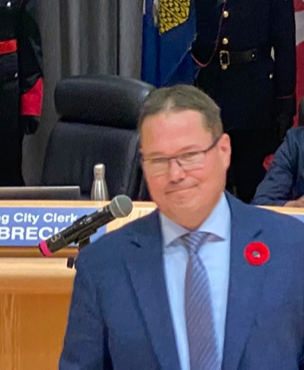
Councillor Chris Hellman, Nov 3 2025 Swearing in Ceremony - File Photo
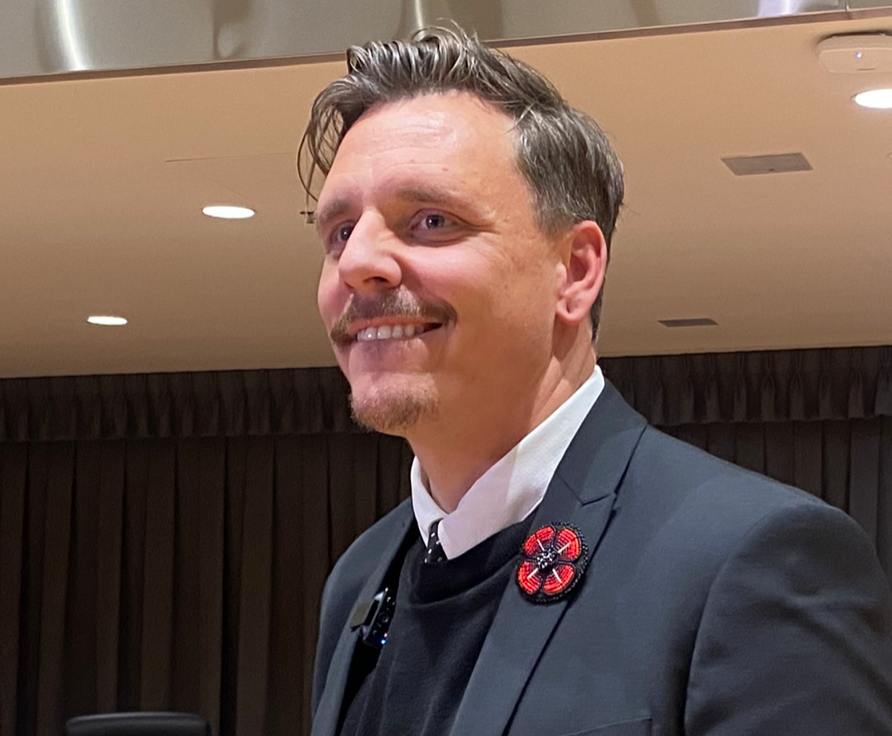
Councillor Stuart Young, Nov 3 2025 Swearing in Ceremony - File Photo
July 6 2026 Council Meeting Transcript of Addressing Motion
Mayor Clark: This waspresented as a notice of motion at our previous meeting.
Councillor Cocks: Thank you, Your Worship. That is correct.
A couple of comments by way of introduction.
First, the subject heading in the agenda, "Water Not Coal Petition," is not what I labeled this. You will see that from my material and from the motion itself. I did use the words "Water Not Coal," but I did not link it directly to the petition. That was an administrative addition which I had nothing to do with.
The motion is there, Your Worship. I have given notice of it and I would therefore move as follows.
Mayor Clark: I'm just going to before you make your motion. There is an opportunity for questions if you wish.
Councillor Cocks: Wouldn't the motion be better on the floor and then the questions?
Mayor Clark: Okay. But if it doesn't get seconded then okay, go ahead.
Councillor Cocks: Are you foreshadowing, Your Worship?
Mayor Clark: No, I'm not.
Councillor Cocks:
Whereas Medicine Hat has a direct and continuing interest in the protection of clean water and the integrity of Alberta's watersheds.
And whereas the City of Medicine Hat wishes to reaffirm the City's commitment to the protection of clean, safe, and reliable water resources for current and future generations.
And whereas exploration and mining for coal raises concerns relating to water quality, runoff, land disturbance, tailings, and cumulative impacts on downstream users and the agrarian community.
And whereas water security and economic development are core municipal concerns.
Now therefore, be it resolved that the Mayor, on behalf of Council, forthwith forward a letter to the Premier of Alberta, the Minister of Environment and Protected Areas, the Minister of Municipal Affairs, and any other provincial or federal officials expressing Council's concern regarding any coal-related activity that may jeopardize watershed protection and drinking water security.
Mayor Clark: All right. So we have a motion made and we are looking for a seconder to the motion.
All right, if there is not a seconder to the motion, we cannot speak to it now.
Councillor Cocks: Very well. I would like to address the issue but if you feel that would be inappropriate.
Mayor Clark: Prior to that, you got an introduction. Once it got seconded, then you would have an opportunity to speak to the motion.
Councillor Cocks: Very well, Your Worship.
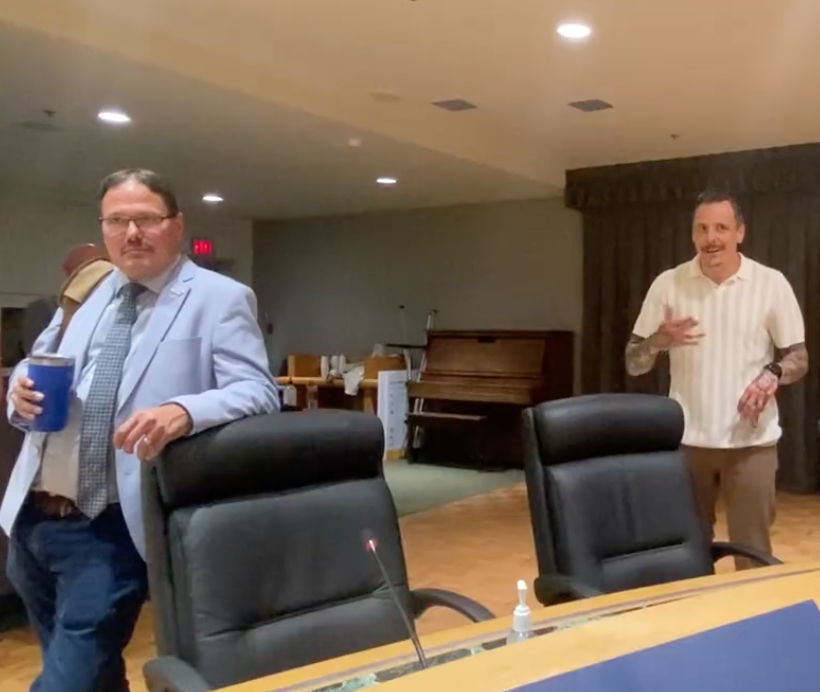
Screen grab from the Media scrum July 6 2026 - L-R Councillors Hellman and Young
